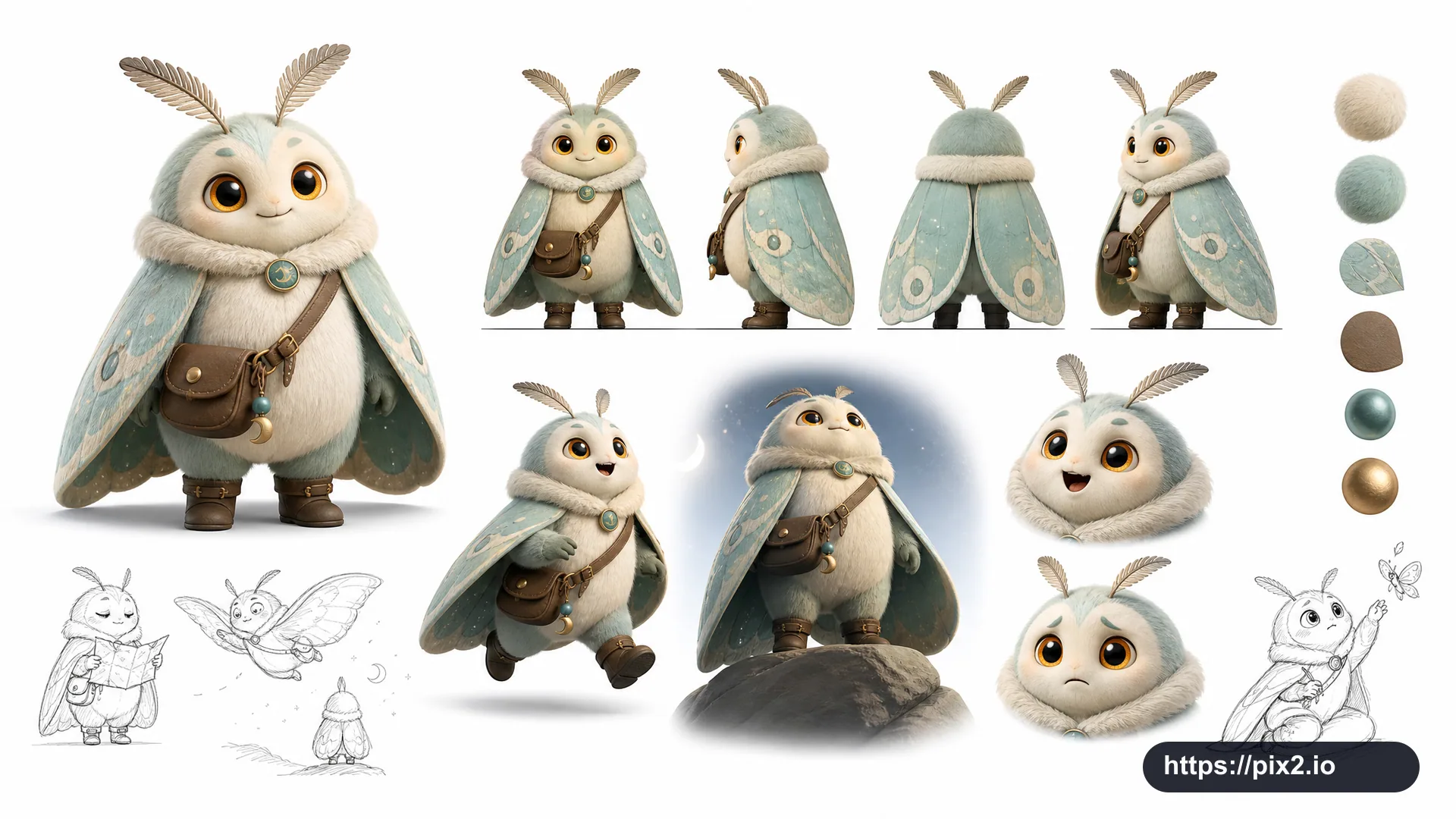
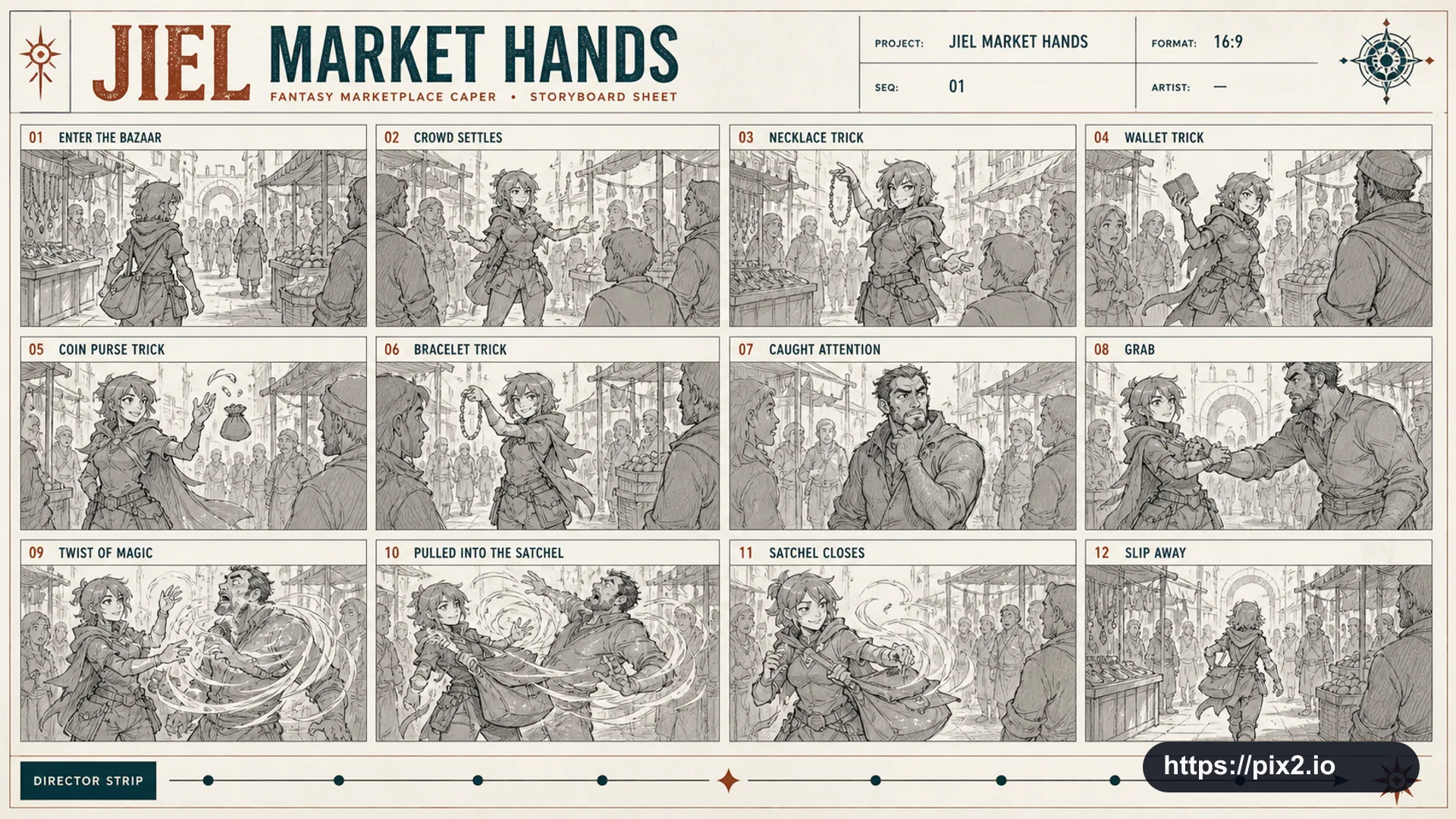
Create a 16:9 compact animation project card for a fantasy bazaar caper sequence. Design a clear masthead, not a table, with the title JIEL MARKET HANDS, a sly fantasy marketplace mood, fast kinetic energy, readable hand-trick staging, crowd geography, and a magical satchel payoff. Use the attached authorized character sheet to control C1's face, body, wardrobe, proportions, red hood, short red hair, wrapped hands, belt, pouches, tan satchel, and boots. Use the attached authorized market reference to control bazaar density, stall layout, warm dust, awnings, crowd scale, and painterly-world texture. Show C1 as a young adult red-hooded trickster performer with freckles, a slim agile silhouette, cropped cloak, scarf, wrapped hands, utility belt, tan satchel, boots, low quiet posture, and quick precise hands. Show C2 as an adult market man with a taller average build, rolled sleeves, dark vest, stern stance, and startled body language when the magic satchel pulls him forward. Show C3 as background market crowd and vendors in readable silhouettes only. Keep identity, age, body type, wardrobe, and left-to-right movement consistent across all panels. Avoid redesigning, beautifying, merging, or age-shifting the characters. Build a 12-panel 4x3 storyboard sheet set in one sunlit packed market alley with stalls on both sides, hanging fabrics overhead, a jewelry stall on the left, fruit baskets on the right, a cloth booth in the midground, an arched exit in the background, and a narrow side gap at screen right. The sequence should read as playful fantasy stagecraft rather than practical theft: P01 full bazaar master shot, P02 necklace-prop hand trick, P03 crowd bump and wallet-prop misdirection, P04 coin-purse prop insert, P05 fruit-stall distraction with bracelet prop, P06 overhead crowd weave, P07 witness notices, P08 wrist grab, P09 anxious turn, P10 satchel opens with warped pull, P11 C2 folds into the magic bag through a pale spiral fabric-warp effect, and P12 C1 snaps the bag shut and exits into the crowd. Panel images must be visual-only low-detail monochrome light-gray rough sketches. Put panel numbers, beat names, and lens tags in header strips outside each panel image. Do not put labels, arrows, captions, subtitles, logos, watermarks, timing marks, diagrams, UI overlays, ghost poses, duplicate bodies, or technical overlays inside the panel artwork. Use a restrained off-white sheet design with tiny rust and dark-teal accents outside the panel artwork only. Add a bottom director strip aligned to the panel columns with beat line, camera path, action path, rhythm blocks, escalation map, state track, and style track using shot chips, thin lines, small intensity bars, and one-to-three-word labels, with no seconds or timestamps. Keep the emotional arc clear: quiet control, playful precision, rising risk, caught alarm, impossible reversal, and clean escape. Render simplified bazaar forms, readable silhouettes, light-gray gesture lines, authentic rough storyboard energy, consistent spatial continuity, a pale sketch spiral for the final magic-bag effect, no gore, no horror, no dense finished concept art, and no colored glow inside panels. Output aspect ratio: 16:9.

 16:9 ・ 4K