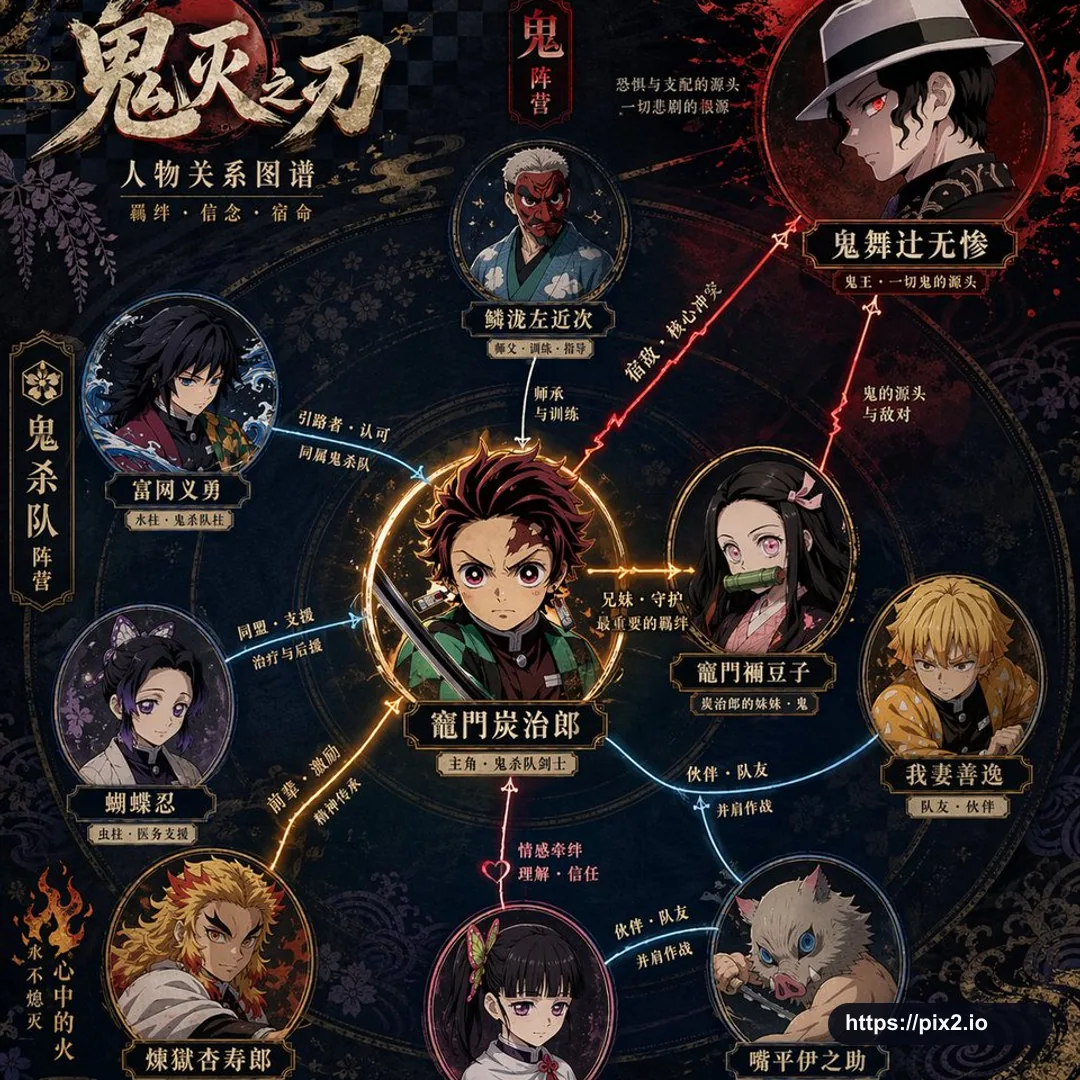
Generate a square 1:1 high-design character relationship map poster based on [Story World]. The image should not be a simple illustration; it should be a character relationship map that combines information visualization, narrative structure, premium poster design, and stylistic fidelity to the provided or authorized story universe. Identify the core setting of the story world and choose 6 to 12 representative key characters, never exceeding 15 unless the user explicitly requests it. Display key relationships such as blood ties, romance, friendship, alliances, hostility, master-disciple bonds, mentorship, faction loyalty, betrayal, rivalry, protection, and shared destiny. Choose the composition method that best fits the work: protagonist-centered, dual-core confrontation, faction-based, family tree, chronological evolution, or another clear narrative structure. Refine the style DNA of the story world into original design language: color palette, worldview symbols, textures, mood, typography, framing motifs, faction emblems, and representative atmosphere. Transform those stylistic elements into an original relationship-map design rather than copying an official poster. Use different colors, line styles, arrows, icons, and labels to distinguish relationship types, keeping linework layered and clear without clutter. Make core characters the most prominent, important supporting characters secondary, and minor characters visually quieter to create a strong hierarchy. Ensure every character name is legible, with identity, role, or faction labels when necessary. The final result should immediately communicate character hierarchy and key relationships, align with the story temperament and setting, combine infographic clarity with premium poster design, feel unified and complete, and be suitable for social sharing or poster display. Avoid official logos, copied character designs, protected franchise names, exact celebrity likenesses, cheap flowchart styling, messy stacking, information overload, unreadable text, confusing relationship lines, extra watermarks, and low-resolution artifacts.

 1:1 ・ 4K