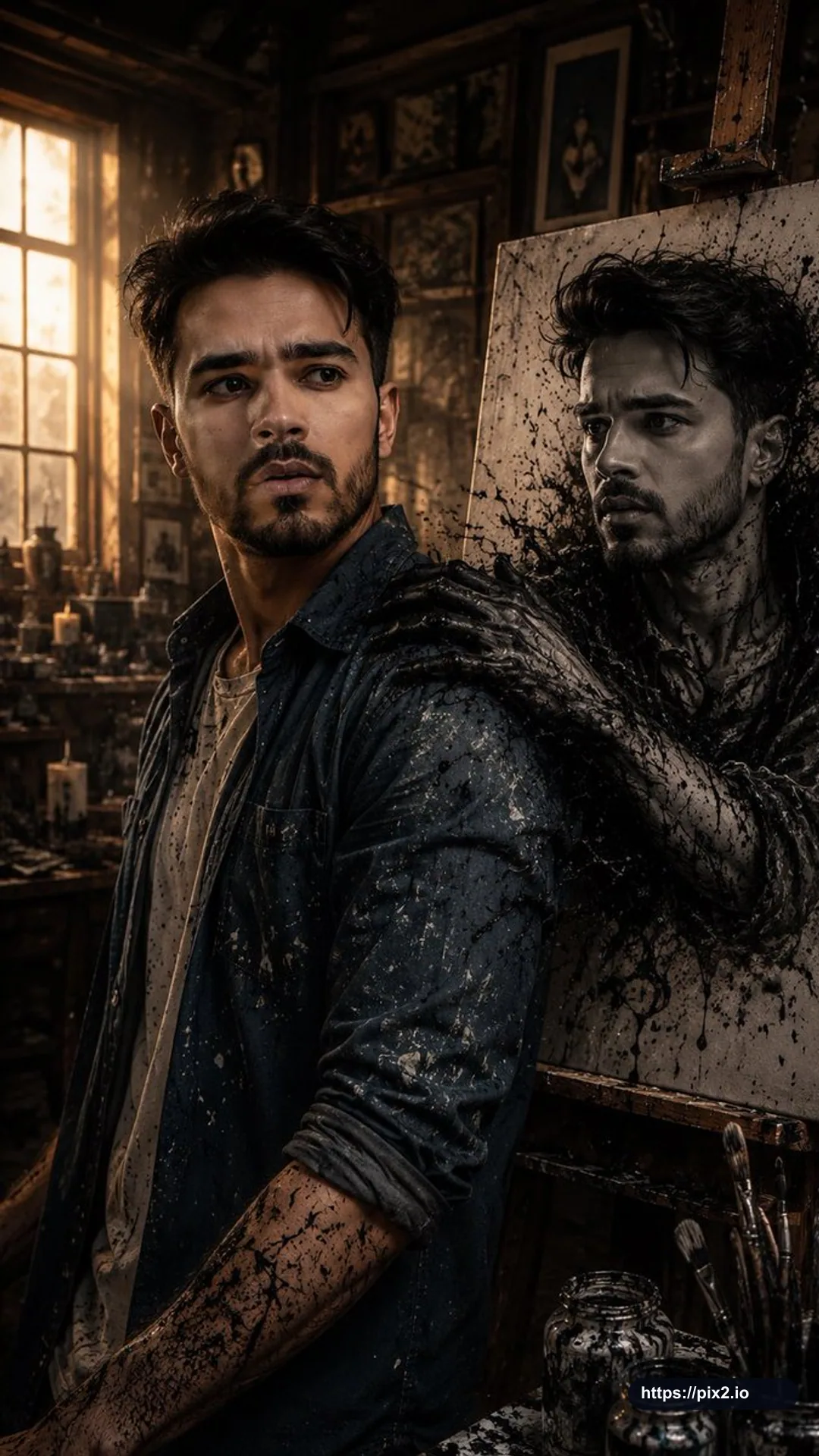
Use the uploaded authorized portrait reference as the primary identity reference. Preserve the subject’s exact facial structure, jawline, cheekbones, eye shape, eyebrows, nose shape, lips, facial hair or stubble style, hairstyle, hair texture, skin texture, natural features, and recognizable overall appearance with very high identity fidelity. Keep realistic proportions, natural facial anatomy, and detailed skin texture. Create a hyper-real dark-fantasy psychological portrait set in an abandoned old artist studio. The same adult man stands beside a large canvas on a wooden easel, wearing a slightly worn deep blue denim shirt over a pale beige T-shirt, sleeves rolled up, with black paint splashes on his clothes and forearms. He suddenly turns over his shoulder with frightened wide eyes, frozen in suspense as if sensing an unseen presence behind him. From the canvas emerges a terrifying living version of his painted self: the double has the exact same face but appears monochrome, weathered, ghostlike, and made from broken charcoal texture, dripping paint, liquid shadow, black ink fragments, smoke particles, and shadow tendrils. One black-ink-covered hand reaches out from the canvas and grips the man’s shoulder, making the supernatural moment the visual focus. Surround the scene with scattered brushes, paint jars, unfinished canvases, antique wooden furniture, floating dust, aged framed artwork, and dramatic studio clutter. Warm golden sunset enters from a large left window and contrasts with deep room shadows. Use cinematic Rembrandt light, volumetric beams, moody contrast, amber highlights, charcoal blacks, subtle rim light around both figures, realistic global illumination, atmospheric haze, shallow depth of field, and a vertical 9:16 composition. Style: hyper-real cinematic horror realism, psychological thriller, dark fantasy, masterful photography, ultra-detailed skin, realistic eyes, complex paint splatter, dramatic narrative, award-level concept art, photoreal rendering, crisp focus, and cinematic color grading. Avoid cartoon, anime, low resolution, blurry faces, distorted hands, extra fingers, duplicated people, unrealistic anatomy, oversaturated colors, plastic skin, missing detail, readable text, watermarks, logos, cropped faces, malformed features, mutated limbs, poor lighting, and flat composition.

 9:16 ・ 4K