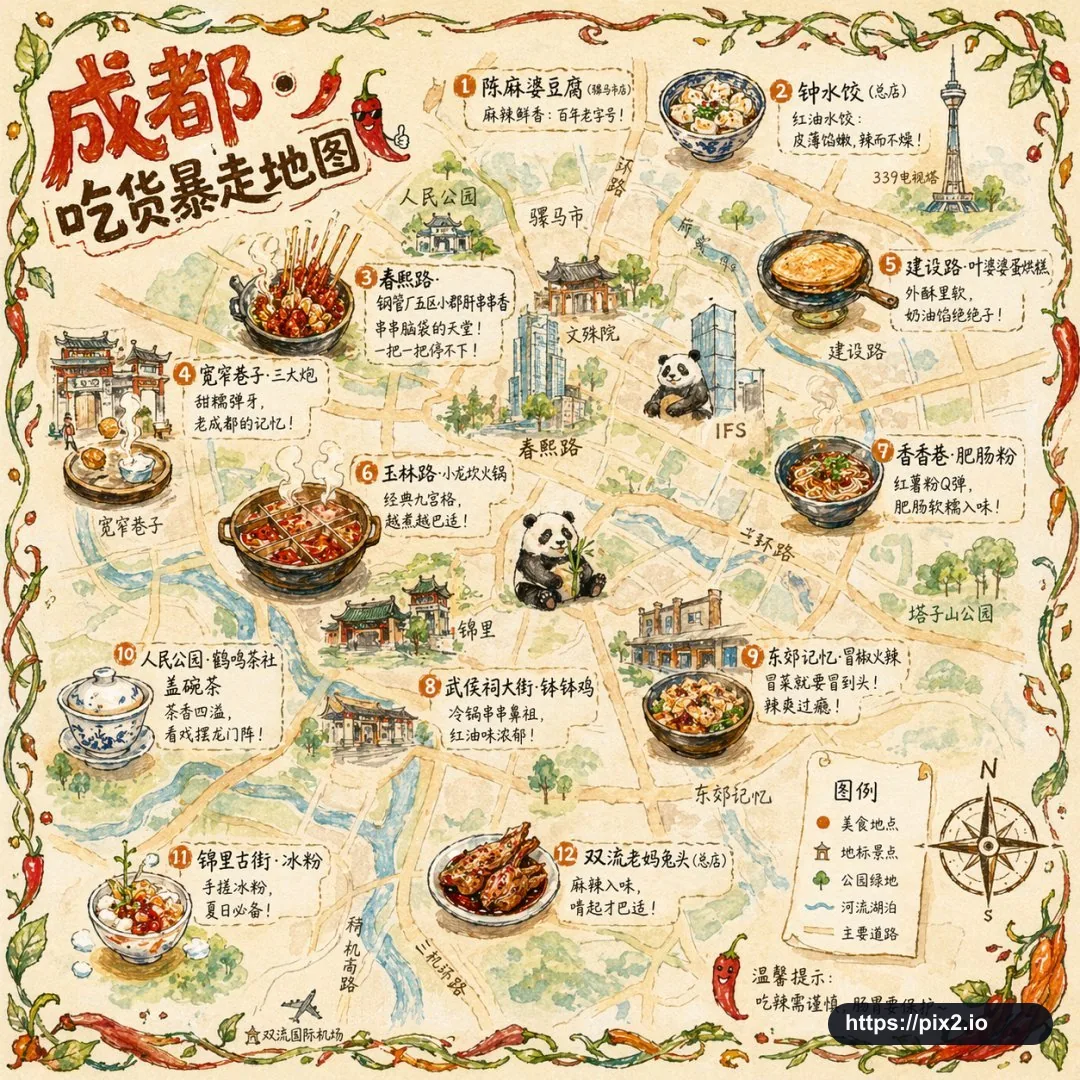
Create a square 1:1 illustrated map infographic in [Art Style]. The main text should read “[City Name]” and “[Map Title]”. Add a playful cartoon red chili pepper mascot wearing sunglasses and giving a thumbs up. Frame the map with [Border Decoration]. Use textured beige parchment paper as the background, with yellow roads, blue rivers, green park areas, and a hand-drawn city-map layout. Include landmark sections with traditional pavilions, a monastery, a modern skyscraper with a climbing panda, a tall TV tower, a traditional gate, industrial buildings, People’s Park, the 339 TV Tower, Kuanzhai Alley, and Eastern Suburb Memory. Include food-spot sections with mapo tofu, chili-oil dumplings, skewers in a pot, sticky rice balls, egg baked cake, nine-grid hotpot, sweet potato noodles, cold skewers, spicy mixed dish, covered tea bowl, ice jelly dessert, and spicy rabbit heads. Number twelve stops, including Chen Mapo Tofu, Zhong Dumplings, Chunxi Road, Kuanzhai Alley, Jianshe Road egg baked cake, Yulin Road hotpot, Xiangxiang Alley sweet potato noodles, Wuhouci Street cold skewers, Eastern Suburb Memory spicy dish, People’s Park Heming Teahouse, Jinli Old Street ice jelly, and Shuangliu rabbit heads. Add a bottom-right map legend with red dot, green house, green tree, blue line, and yellow double line for food spots, landmarks, parks, rivers/lakes, and main roads. Add a giant panda eating bamboo as a centerpiece, a vintage compass rose with N, S, E, W, and a friendly disclaimer text about enjoying spicy food carefully. Keep the text charming, map-like, and as clear as possible. Avoid implying exact navigation accuracy, official tourism endorsement, real restaurant endorsement, medical or digestive-health claims, QR codes, URLs, and unreadable broken text.
Output aspect ratio: 1:1.

 1:1 ・ 4K