Replaceable fields
[Technique]sous-vide, spherification, Maillard reaction, and emulsification
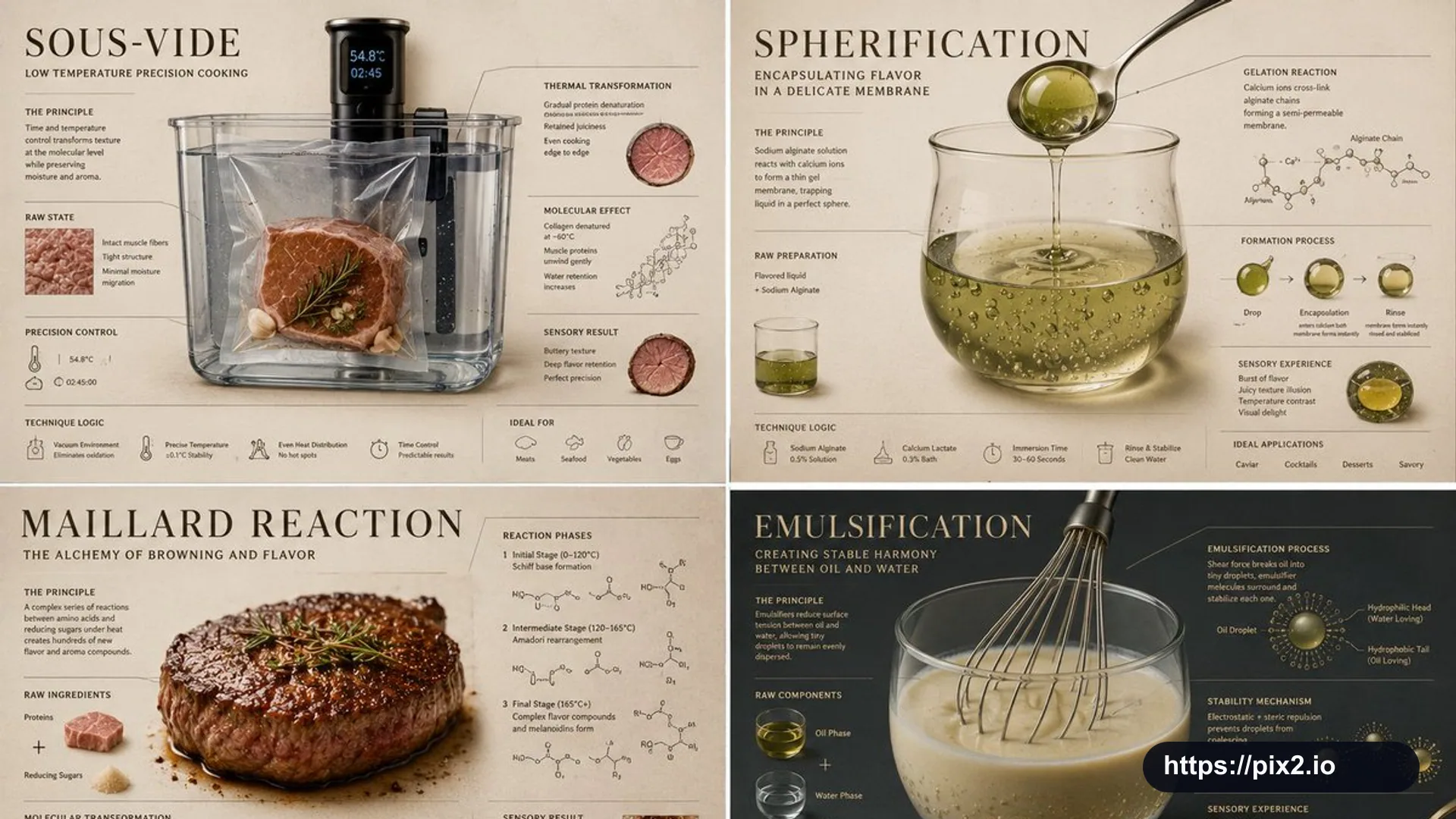
Create a 16:9 luxury culinary chemistry infographic poster in a 2x2 grid. For four cooking techniques based on [Technique], render each module as a premium thermodynamic culinary reaction chamber poster. Avoid hard-coding full recipes unless unavoidable. Instead, infer phase-change mechanisms, molecular bonding shifts, volatile aroma release curves, emulsion stability, and the sensory illusion created for the diner.
For each technique, analyze and visualize: thermodynamic transformation from phase change, molecular bonding, Maillard reaction, caramelization, and denaturation; sensory architecture from volatile aroma release, texture contrast, temperature contrast, and umami synergy; technique logic from precise temperature, timing control, catalyst use, and equipment geometry; and a hidden narrative from chef philosophy, historical precedent, ingredient sourcing, and diner psychology.
Composition: each module centers on one core culinary transformation suspended in a macro cross-section. Layers reveal raw ingredient state, precise thermal or chemical intervention points, molecular reorganization such as spherification or foam stability, and the final plated sensory experience. Use restrained annotation lines inspired by high-end perfume formula cards and Michelin-level kitchen protocols.
Style DNA: macro food photography, vintage alchemy text, modern chemistry lab diagrams, luxury perfume analysis, and soft linen-paper texture. Output style: warm ivory or slate-gray luxury culinary poster background, elegant serif typography plus monospaced technical labels, restrained annotations, ultra-realistic macro textures, refined shadows, premium negative space, clean scientific layout, no messy recipe-card clutter, no stock-photo chefs, no cartoon beakers, no generic food-network graphics, no watermark, and no unnatural plastic-looking food.


 16:9 ・ 4K