Replaceable fields
[Fashion Style]boro workwear[Footwear]split-toe work boots[Bottoms]selvedge denim trousers[Top]washed cotton shirt[Outer Layer]indigo sashiko jacket[Accessories]crossbody utility bag[Jewelry]oxidized silver ring[Headwear]patched flat cap[Garment Name]NORAGI JACKET[Fabric]12oz sashiko-stitched cotton[Key Detail]visible repair at the elbow[Background Color]pale blue[Look Name]BORO MONDAY[Mood or Occasion]slow working morning
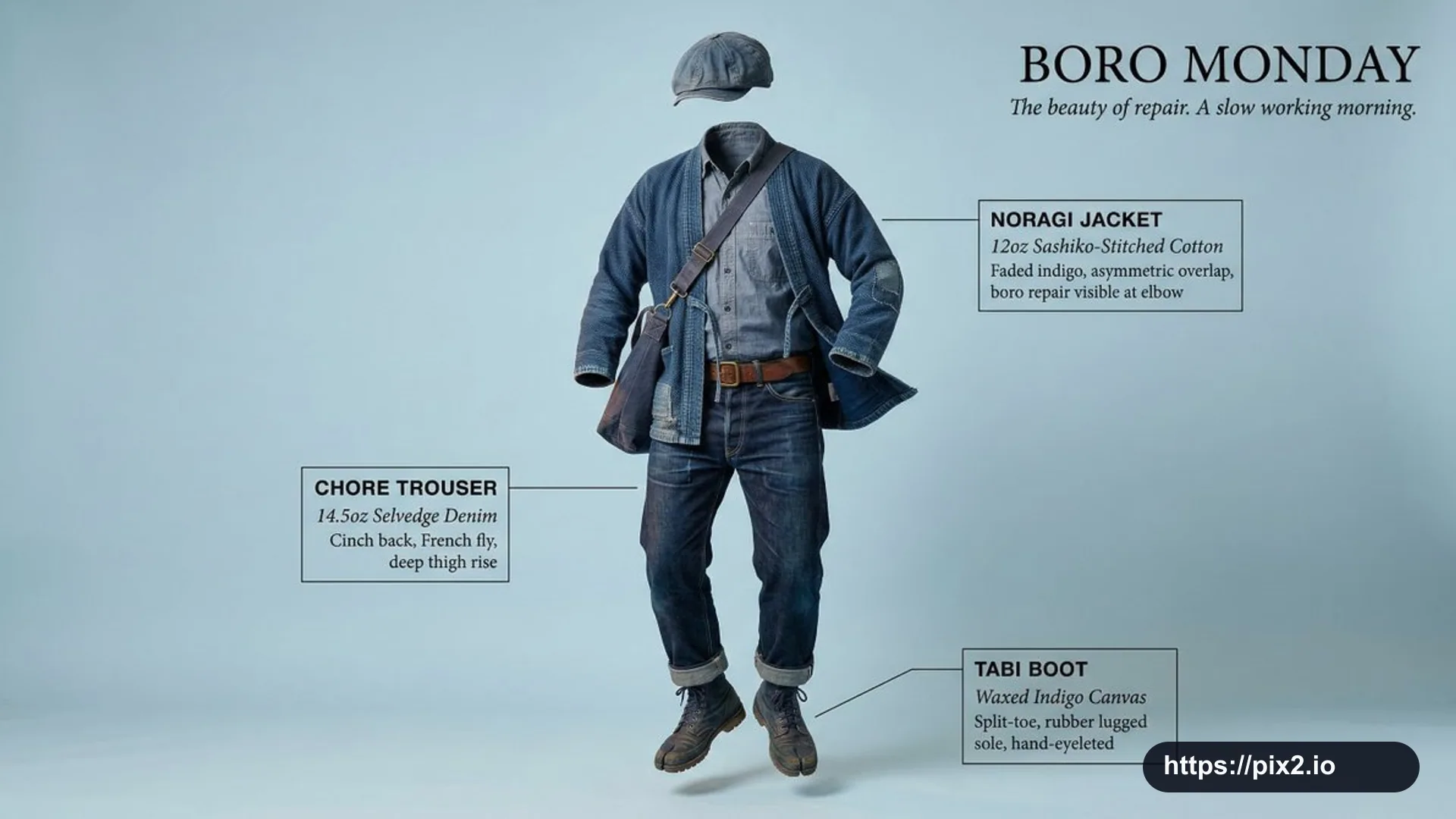
Create a high-concept 16:9 fashion product image featuring a complete [Fashion Style] outfit floating around an invisible human body in the exact positions the garments would occupy when worn. Each item should feel caught in a moment of breathing and drifting.
Arrange the styling from bottom to top in this order: [Footwear] -> [Bottoms] -> [Top] -> [Outer Layer] -> [Accessories] -> [Jewelry] -> [Headwear]. Preserve realistic fabric physics for every material: wool hangs naturally, silk falls lightly, denim keeps its creases, and leather holds its silhouette. Every edge should lift slightly, as if captured by a still breeze.
Add annotation callouts with thin leader lines pointing to floating label boxes. Use "[Garment Name]" in uppercase, "[Fabric]" in italic, and "[Key Detail]" as the detail line. Use a soft directional light from the upper left, warm fill light from below to catch linings and sole edges, and a cool rim light to outline the overall silhouette.
Set the scene on a seamless [Background Color] fashion-forward studio background. Place the title "[Look Name]" in an elegant serif typeface at the upper right, with the subtitle "[Mood or Occasion]" in italic below it. The mood should be a high-concept floating fashion editorial: the clothing feels physically real, while the person exists only in imagination. Use extraordinary fabric texture, crisp sharpness, and a polished 4K commercial finish.

 16:9 ・ 4K