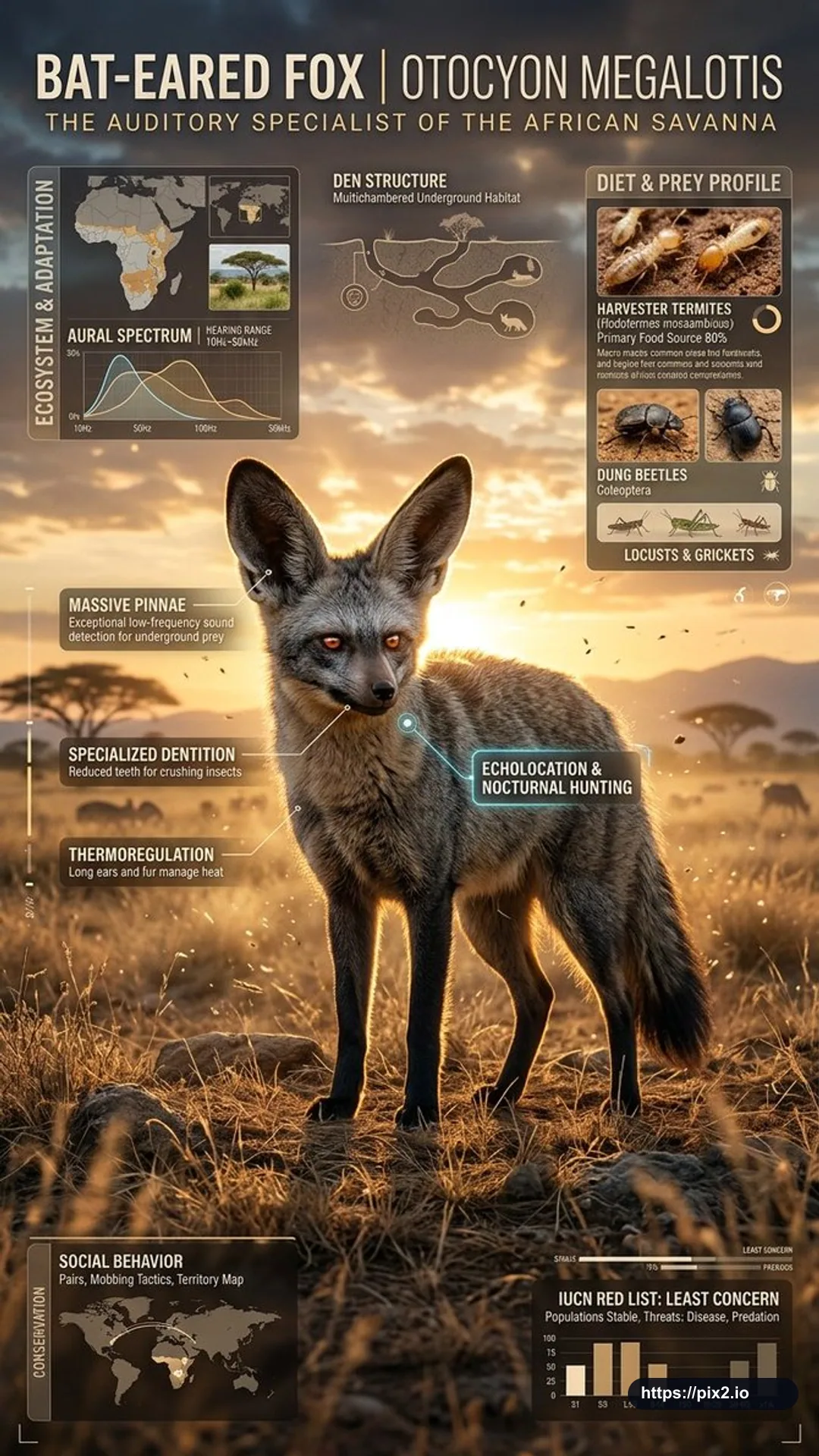
Create a premium cinematic 9:16 wildlife infographic poster centered around [Animal Species]. Make the artwork feel like a futuristic luxury wildlife dossier rather than a plain educational infographic. The animal should dominate the composition with intense photorealistic detail: detailed fur, feathers, or scales as appropriate; realistic eyes; moisture textures; cinematic shadows; environmental interaction; dramatic posture; visible anatomy and muscle structure; floating particles; and powerful eye contact.
The environment must fully match the species: [Environment]. Build dense layered infographic storytelling around the animal using anatomy callouts, adaptation systems, prey and diet visuals, ecosystem overlays, conservation status indicators, geographic range maps, hunting or survival behavior graphics, climate danger visuals, detail inserts, tactical icon systems, scientific-style labels, and compact data snippets. Keep factual-looking labels generic unless verified by the user.
Use an asymmetric editorial composition, layered transparent information panels, premium typography, subtle paper grain, contour-line overlays, holographic UI elements, cinematic infographic markers, and museum-grade visual hierarchy. Blend luxury editorial aesthetic, cinematic documentary realism, futuristic infographic design, and collectible field-guide energy. Color theme: [Color Theme]. Mood: [Mood]. Lighting: dramatic cinematic lighting, volumetric fog, glowing rim light, atmospheric haze, realistic environmental reflections, high-contrast shadows, and ultra-premium editorial lighting. The final artwork should feel like a collectible wildlife poster people would save, repost, print, and frame. Avoid unsupported scientific claims, real organization logos, real conservation badges, misleading maps, QR codes, URLs, or off-topic text. Output aspect ratio: 9:16.

 9:16 ・ 4K