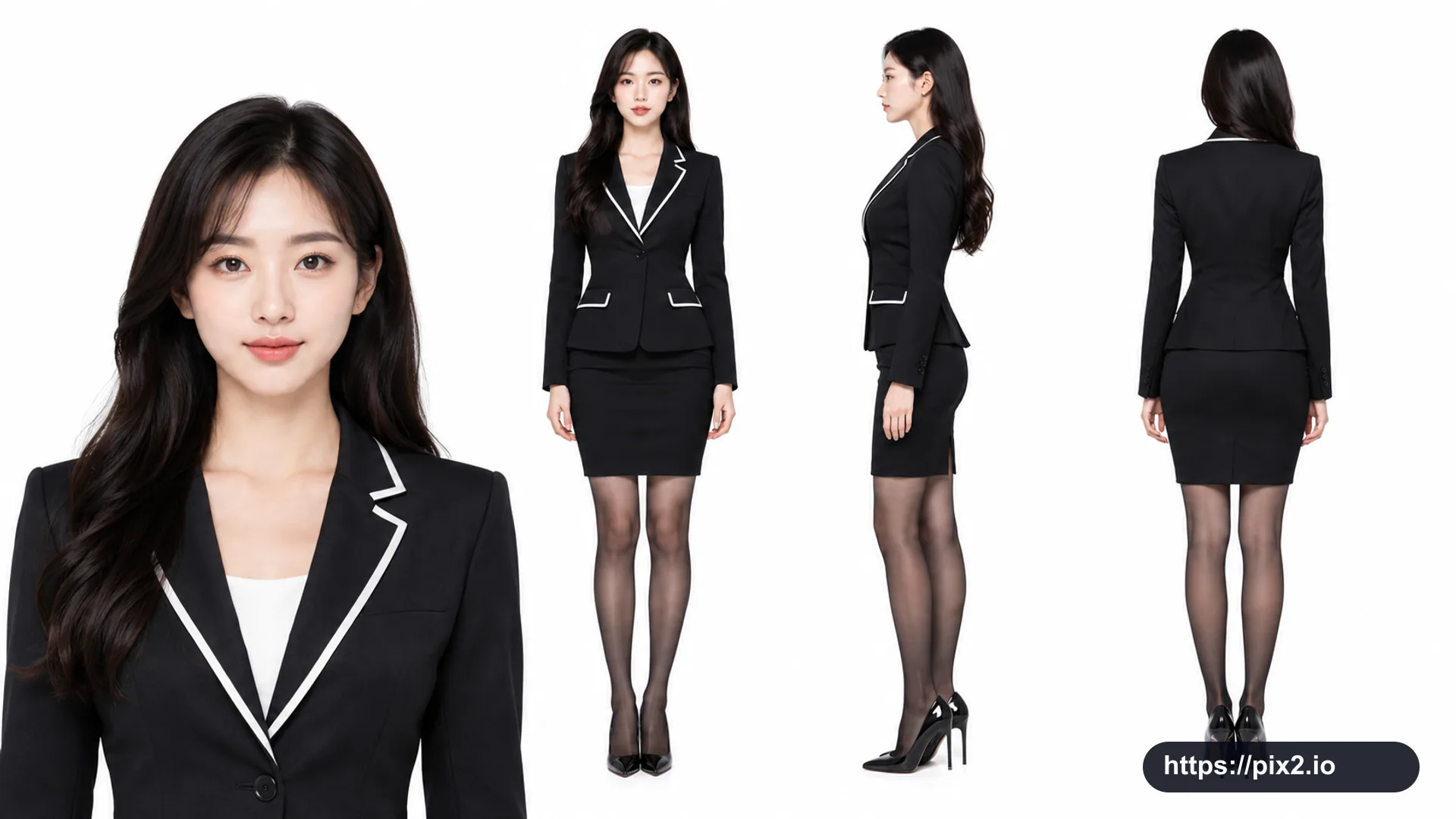
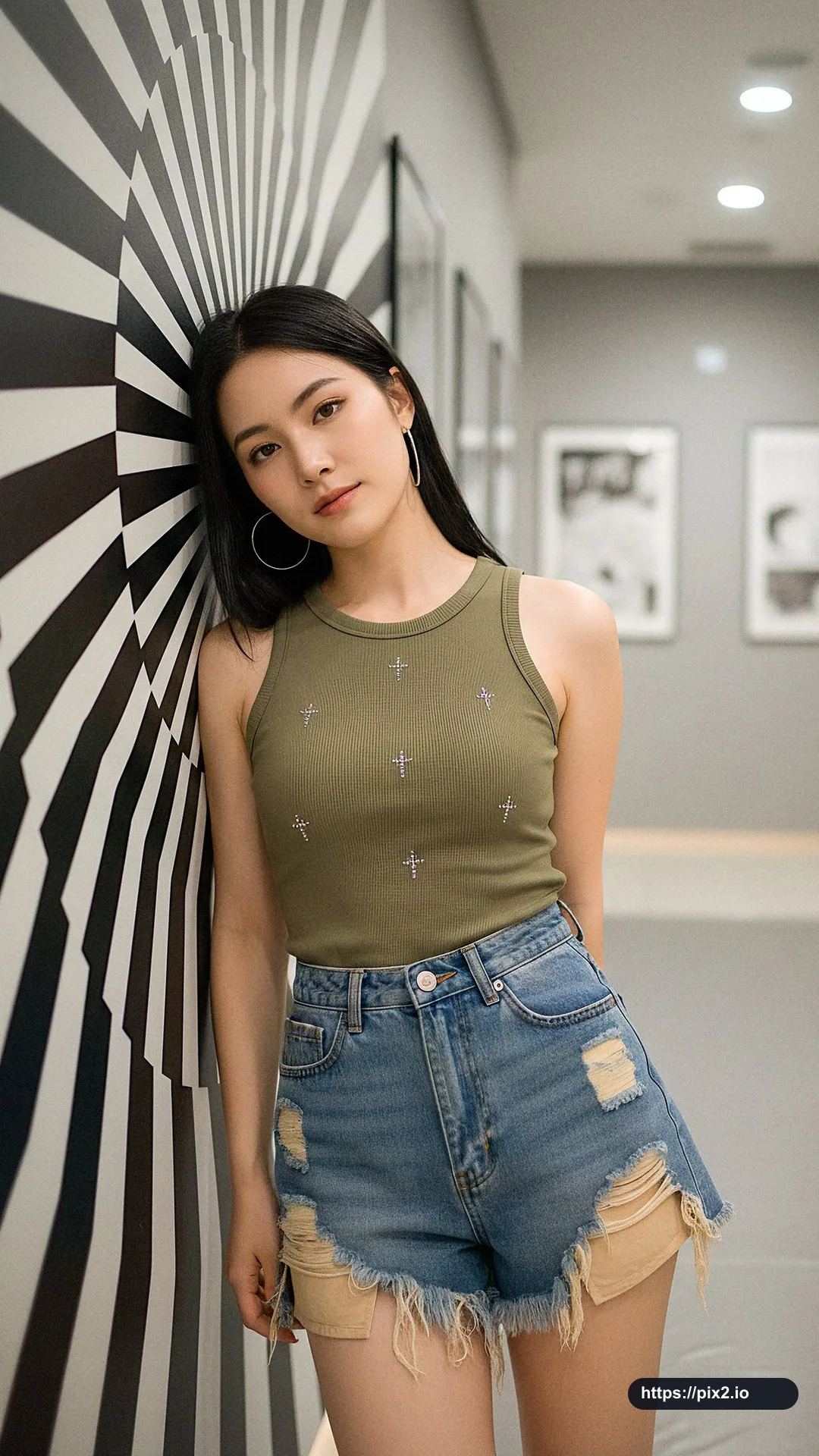
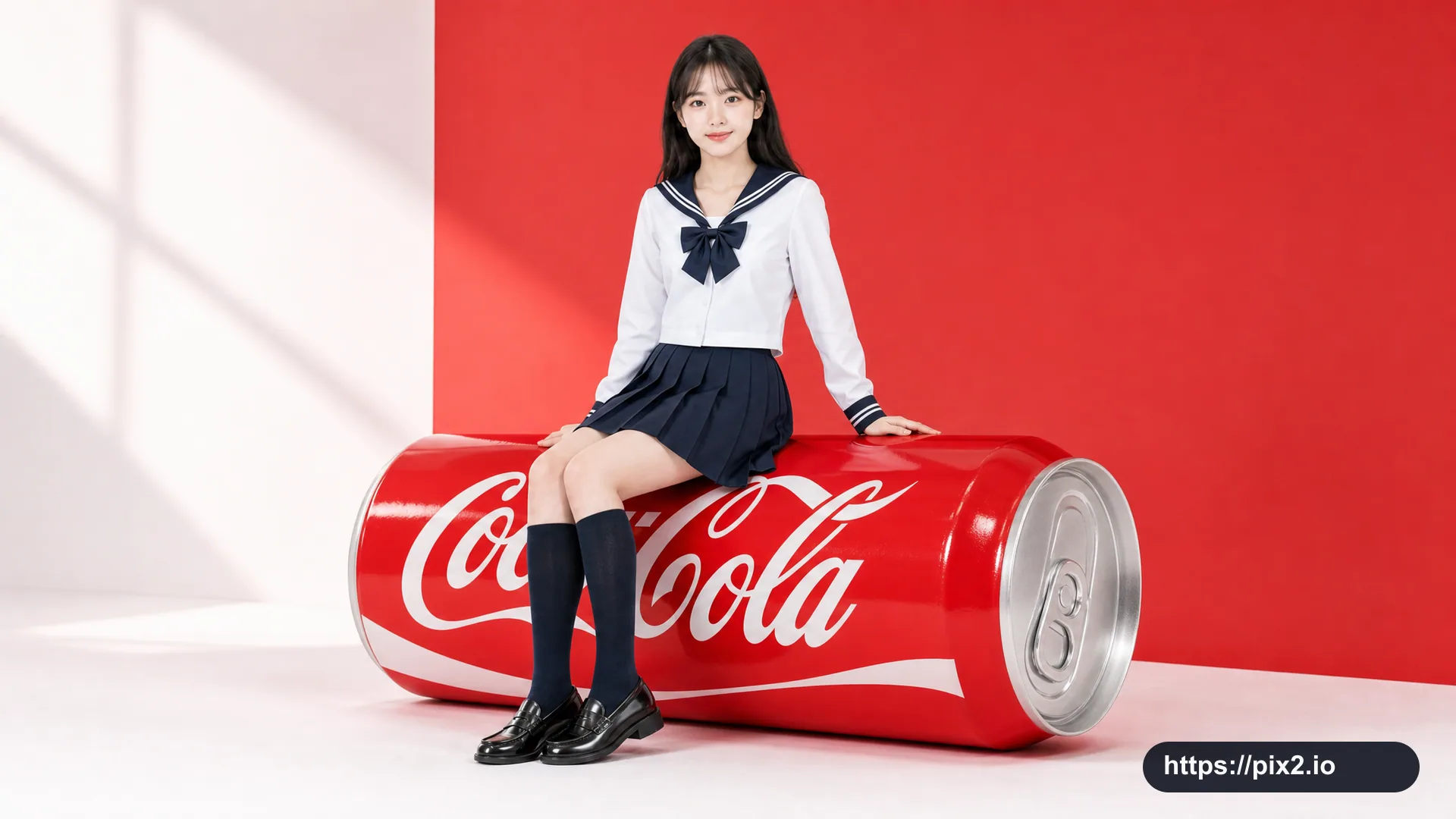
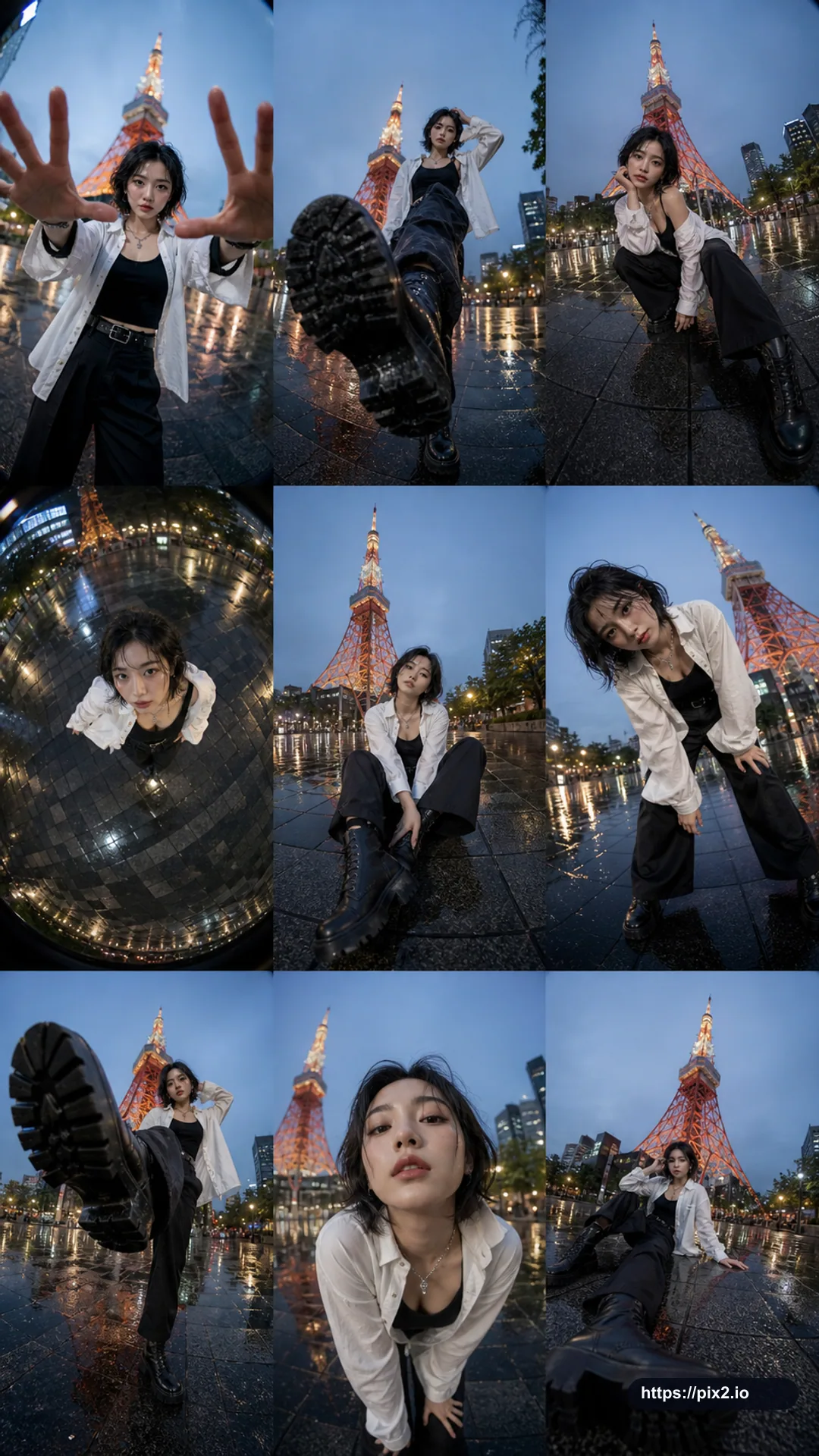
Use the provided private character/person reference to keep the same identity, hairstyle, outfit type, and overall fashion vibe. Create one vertical 9:16 image at Tokyo Tower, using the supplied local current-time atmosphere and real-time weather mood. The output must be a single fixed nine-grid layout with three rows and three columns, and each cell must be an independent shot of the same character exploring the Tokyo Tower location.
Camera and perspective: use an ultra-wide-angle or fisheye-like lens, approximately a full-frame 12-18mm field of view. Make the camera angles significantly different from the reference image and varied across cells: worm's-eye view from directly below, bird's-eye view from directly above, an ultra-low ground-level angle, a high angle looking down, and tilted Dutch-angle compositions. Always create strong perspective foreshortening so the body parts closest to the lens appear massive while the rest of the body extends into the distance.
Body parts near the lens: in each small image, place one or two main body parts extremely close to the lens, and sometimes three for complex poses. Vary the foreground body parts between cells: one or two hands or fingers reaching toward the lens, one or two feet, shoes, or boots close to the lens, knees or thighs, the face very close to the lens, or shoulders/chest close to the lens in a forward-leaning posture. The closest parts should feel almost touching the lens, with clear skin texture, fabric texture, material highlights, and realistic wide-angle distortion.
Pose and body language: create strong, cool, dynamic poses that fit the extreme viewpoints. Randomly vary standing poses with one leg or hand extended toward the lens, squatting or semi-crouching poses near the ground, sitting on the ground or on an object, lying flat with legs or feet toward the lens, strong forward-leaning poses, twisting torso poses, crossed legs, and arched-back body lines. Complex poses may include both hands near the lens making gestures such as a V sign, triangle shape, finger frame, or pointing at the viewer; both feet toward the lens; one hand and one foot as large foreground elements; or the face close to the lens while hands or feet also appear in perspective. Keep the human anatomy reasonable and credible despite the exaggerated foreshortening.
Camera attitude and expression: randomly change camera direction upward, downward, sideways, and tilted while keeping each composition balanced and impactful. Maintain a cool, composed, confident mood leaning toward fashion editorial or street-style photography that matches the original outfit vibe. Facial expressions may vary between serious, playful, confident, and mysterious, but every cell must clearly look like the same person.
Lighting and rendering: maintain realistic shadows, contact with the ground or floor, high resolution, sharp details, visible skin texture, fabric texture, and material highlights. Each cell must be distinctly different in camera angle, pose type, closest body parts, and composition direction. Avoid repeating the same single-foot-close-to-lens composition.
Strict rules: do not change the character into someone else, do not change the clothing type, and only change the presentation through pose, perspective, and natural garment movement. Keep the scene within a reasonable extension of the Tokyo Tower location. Do not add text, logos, watermarks, UI, or graphic design elements. Do not use oil painting, illustration, or anime style; the result must remain completely photorealistic, like bold fashion or street photography. Output: vertical 9:16, high-quality image, clean composition, GPT Image 2 ready.

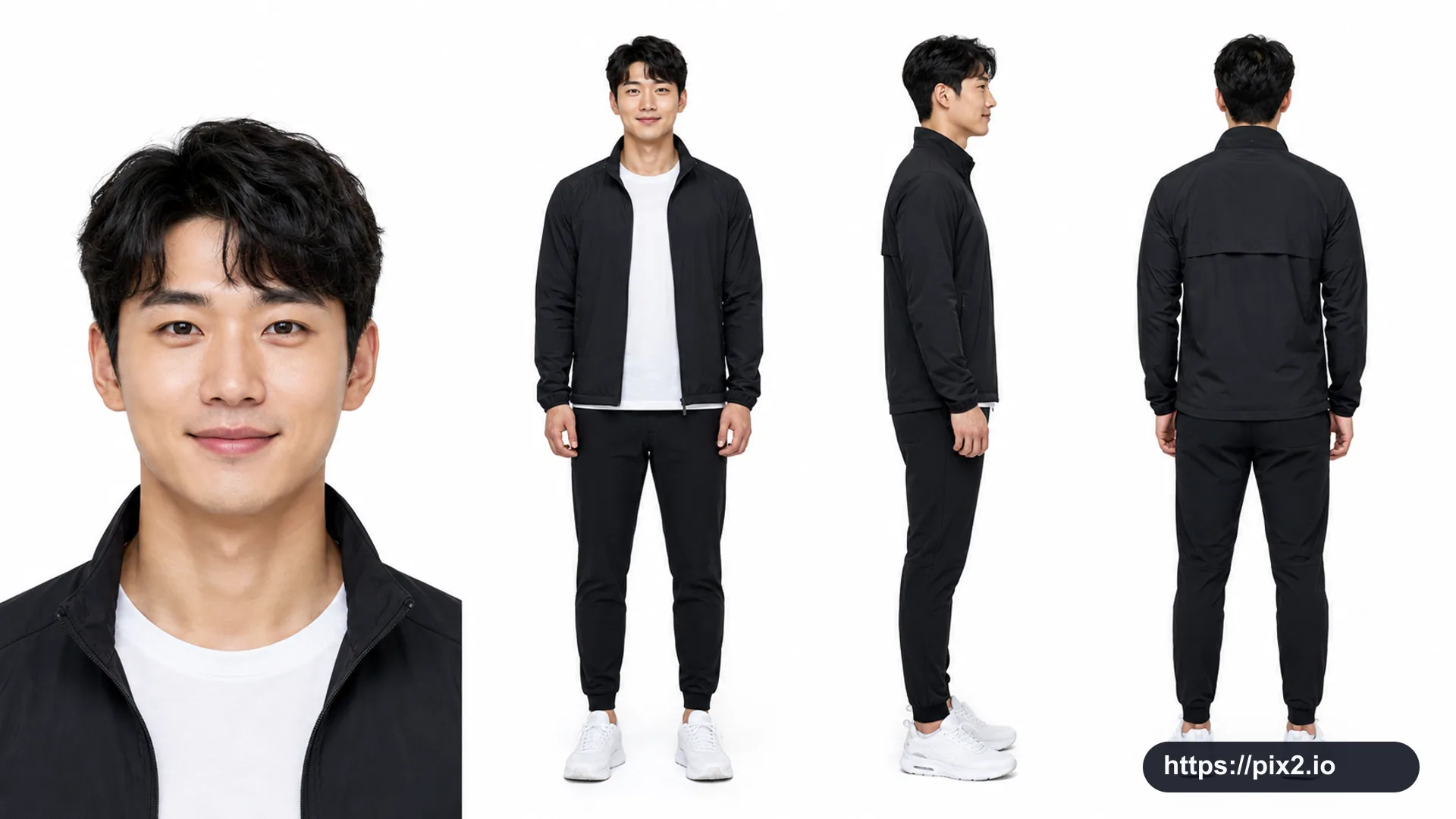
 9:16 ・ 4K