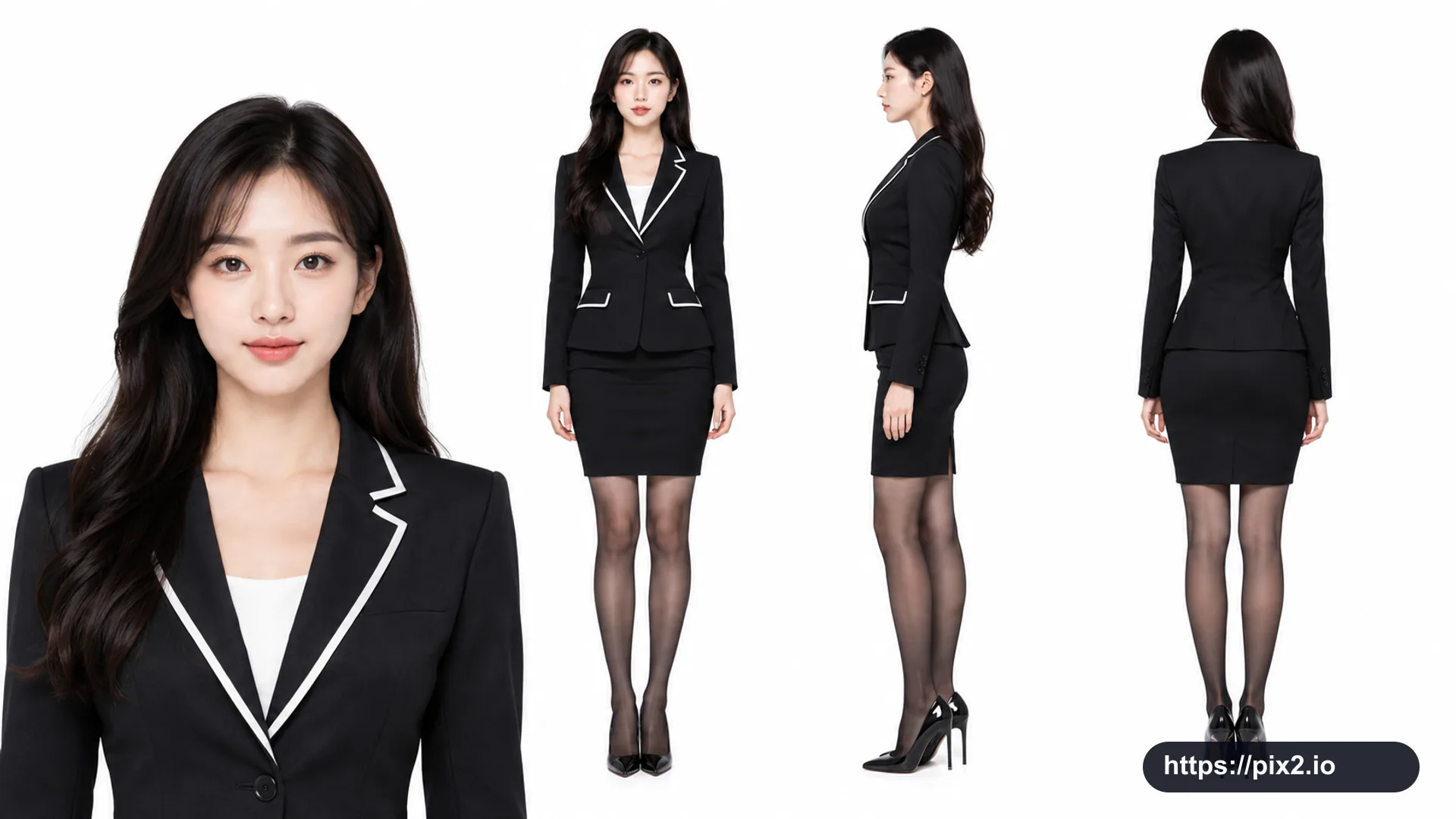
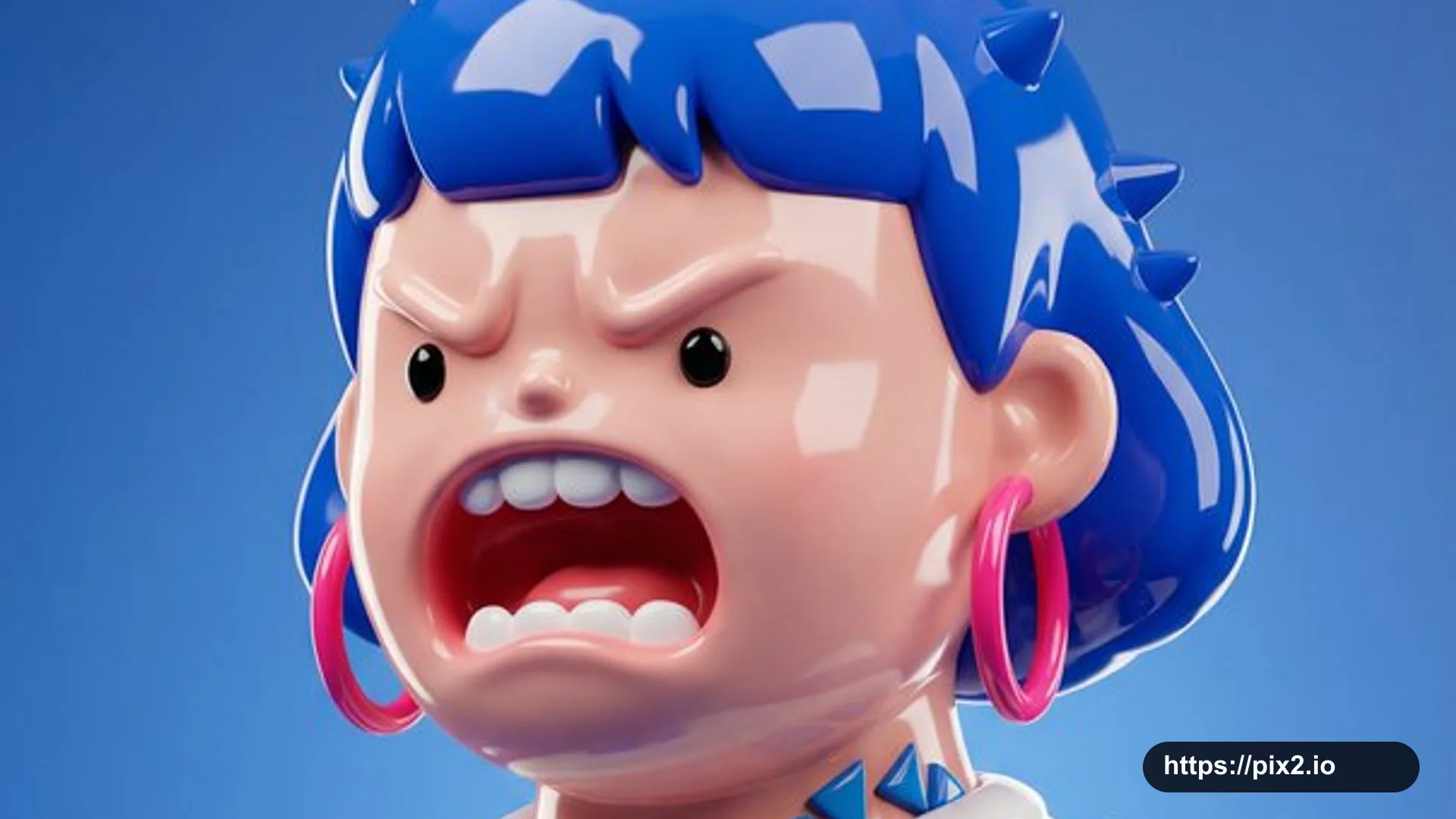
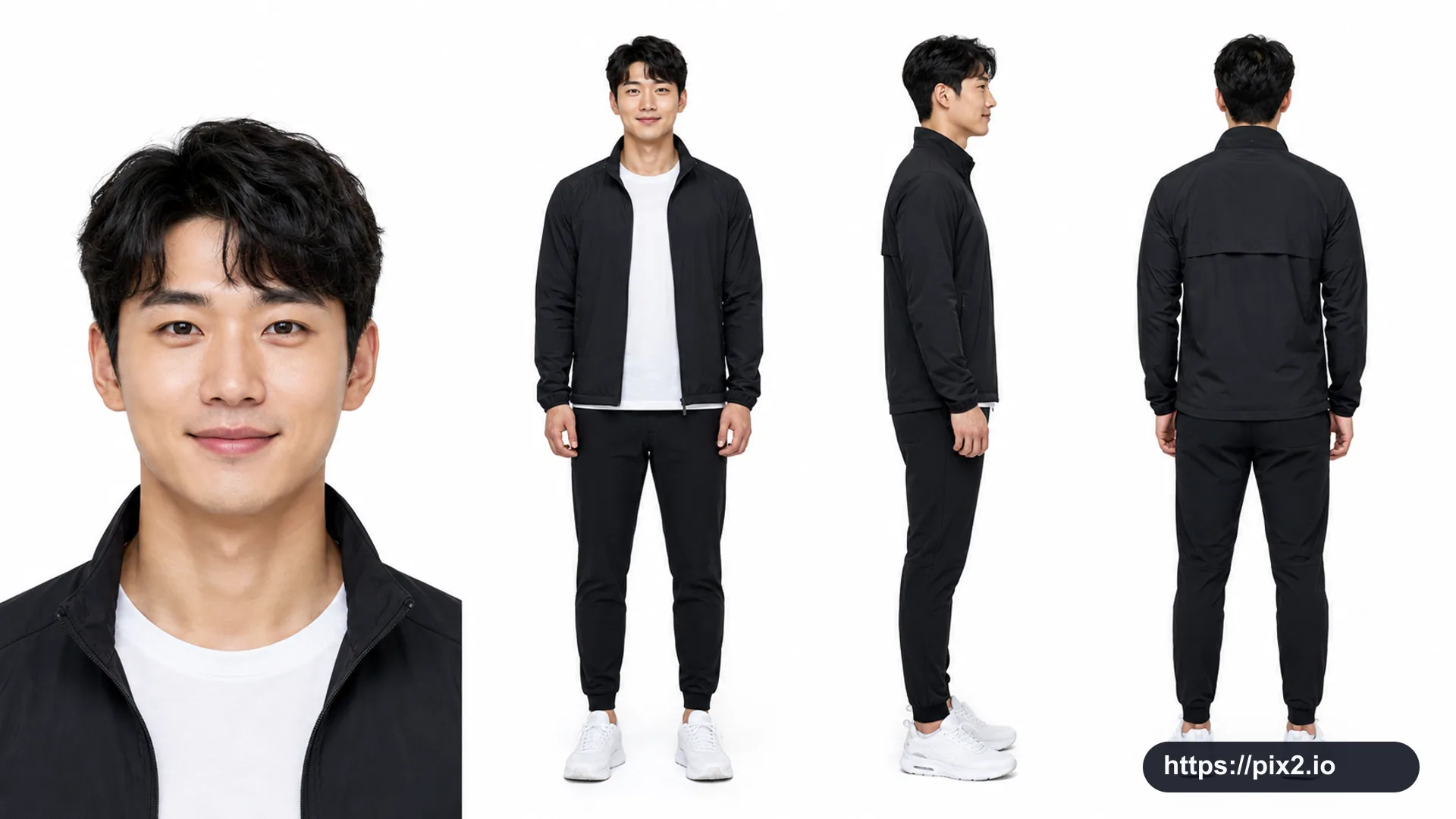
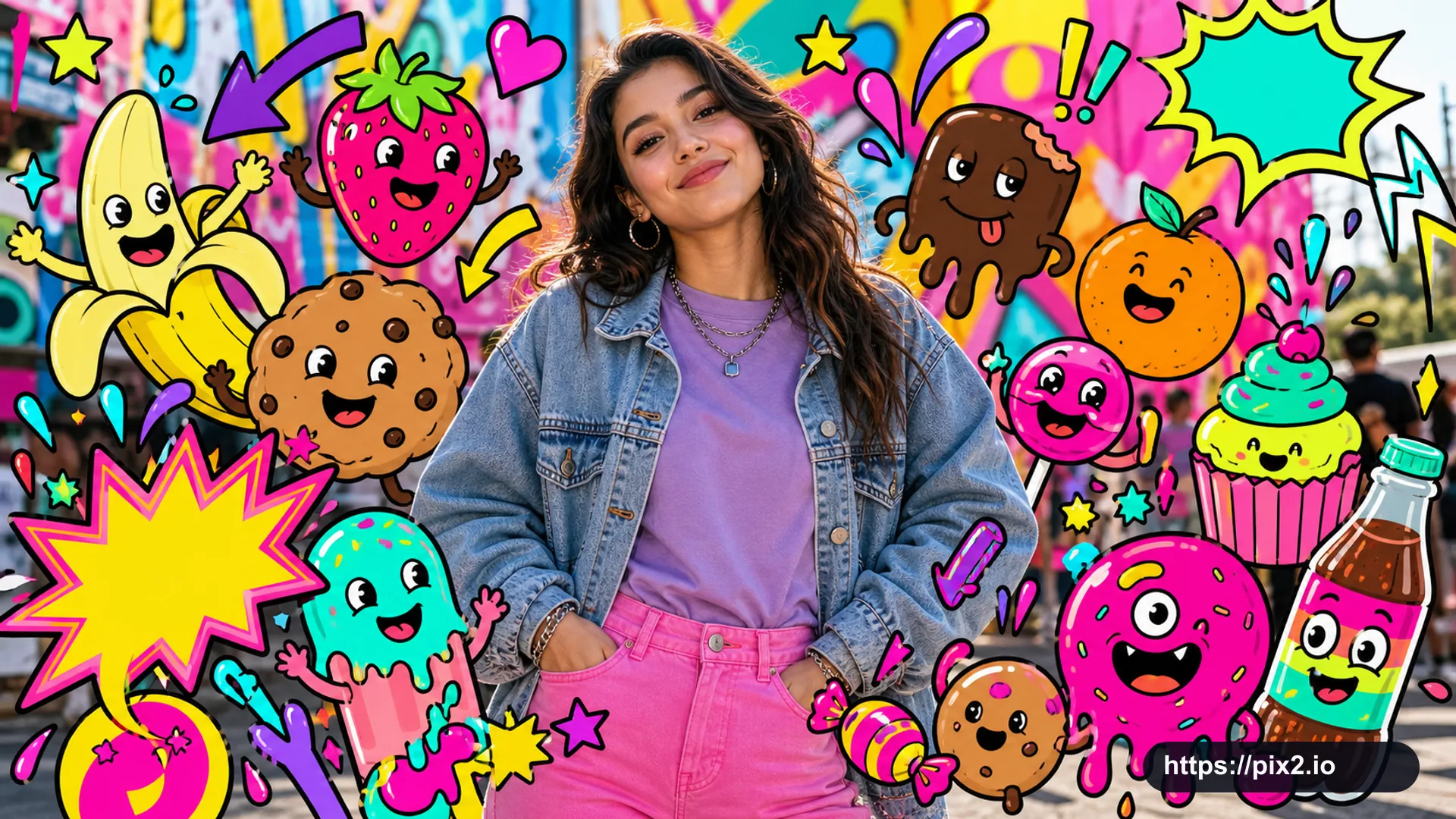
Use the uploaded photo as the base image. Keep the real person's face, body, clothing, colors, fabric texture, and the background perspective photorealistic. Do not turn the person into a drawing or illustration. Add a dense, overloaded layer of pop-art illustrated sweets monsters and graphic decorations only around the person, and on top of clothing or accessories when useful, but never on the person's skin or face.
Illustrated elements should include many colorful cartoon monsters with thick black outlines, flat colors, and cute-but-ugly expressions. Use sweets-inspired monster designs such as bananas, cookies, strawberries, melting chocolate, lollipops, ice cream, oranges, cupcakes, donuts, candy pieces, and soda bottles. Add graphic shapes such as stars, hearts, arrows, drips, splashes, zigzag lines, exclamation marks, motion lines, sparkles, bubbles, and comic-style blank text shapes with no readable text.
Make the decoration very dense and busy: fill the space behind the person with overlapping sweets monsters and shapes, add monsters peeking from behind the shoulders, around bags or accessories, near the feet, and near the head, allow some monsters and shapes to overlap clothing and accessories, use multiple illustration layers in front of and behind the person to create depth, and add glowing outlines, small white dots, and speed lines around the person to emphasize energy.
Use a vivid neon-like palette of hot pink, yellow, cyan, lime, orange, purple, and turquoise. Keep all illustrated elements flat and graphic with clean edges and bold outlines. Add subtle shadows where illustrated monsters touch clothing so they feel integrated with the real photo. The final image should be a highly decorated maximalist pop-art scene where the photorealistic person remains clearly visible in the middle, surrounded by a chaotic crowd of playful sweets monsters and graphic doodles. Output 16:9 aspect ratio, high-quality image, clean composition, GPT Image 2 ready.

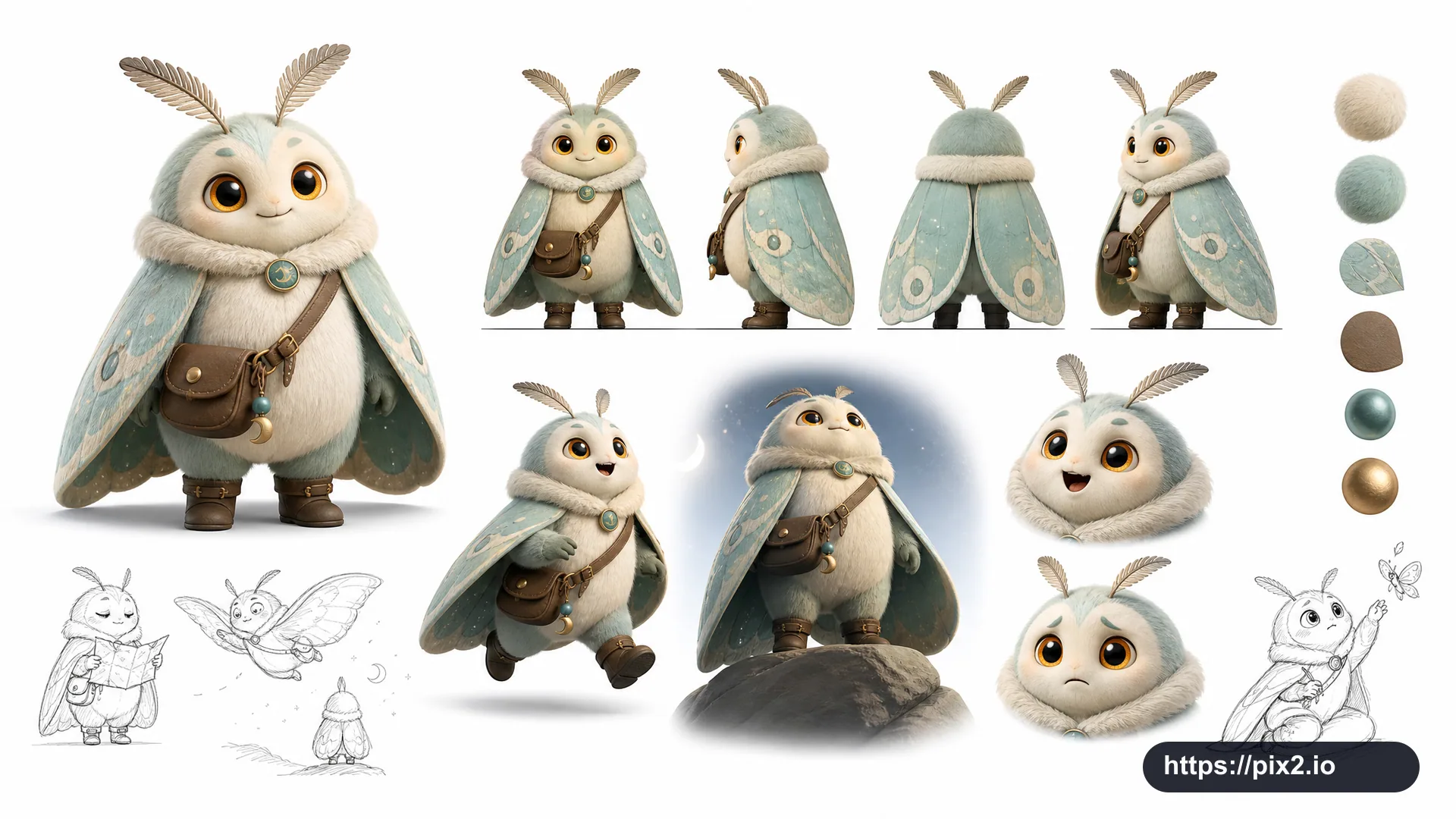
 16:9 ・ 4K