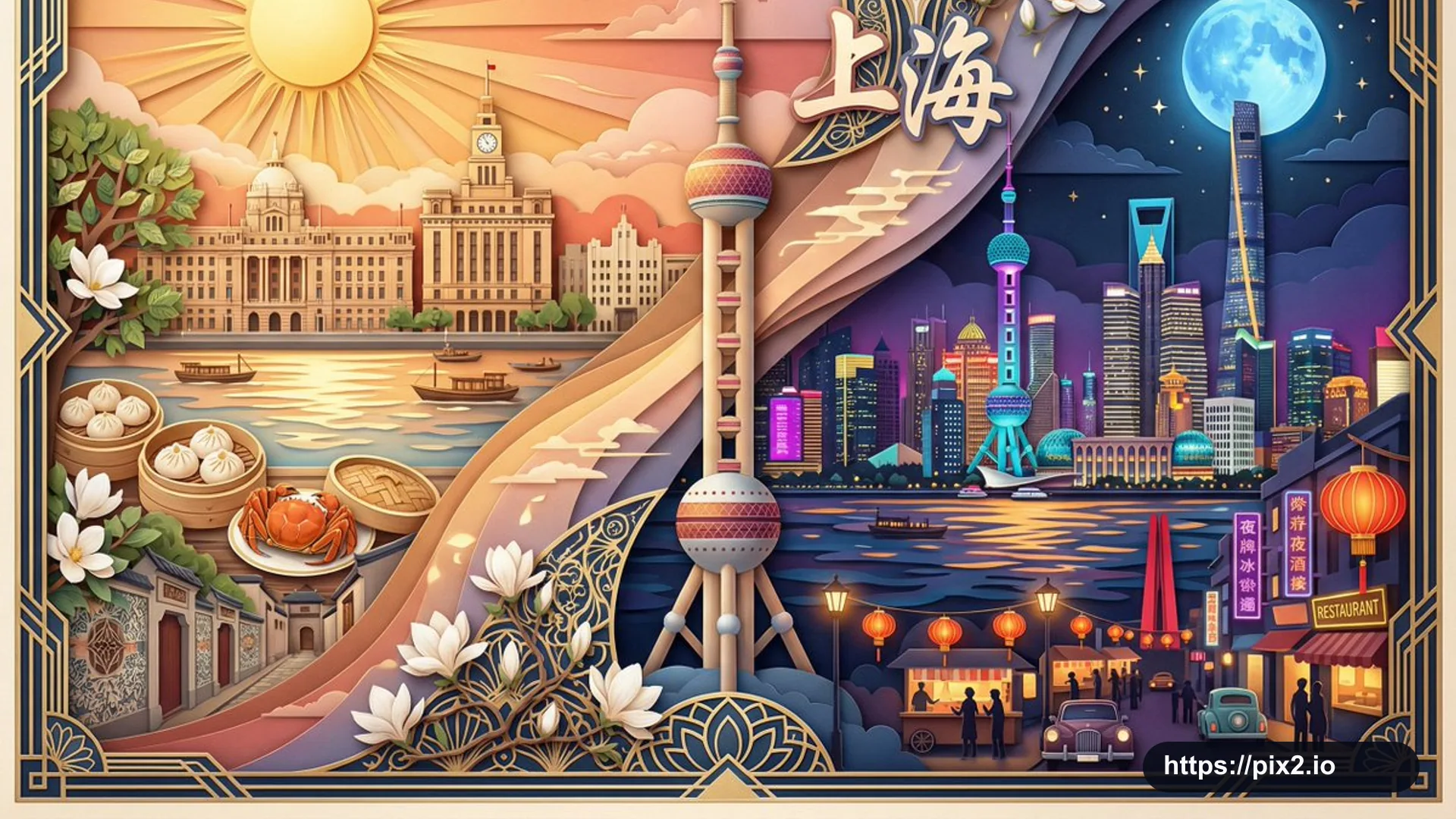
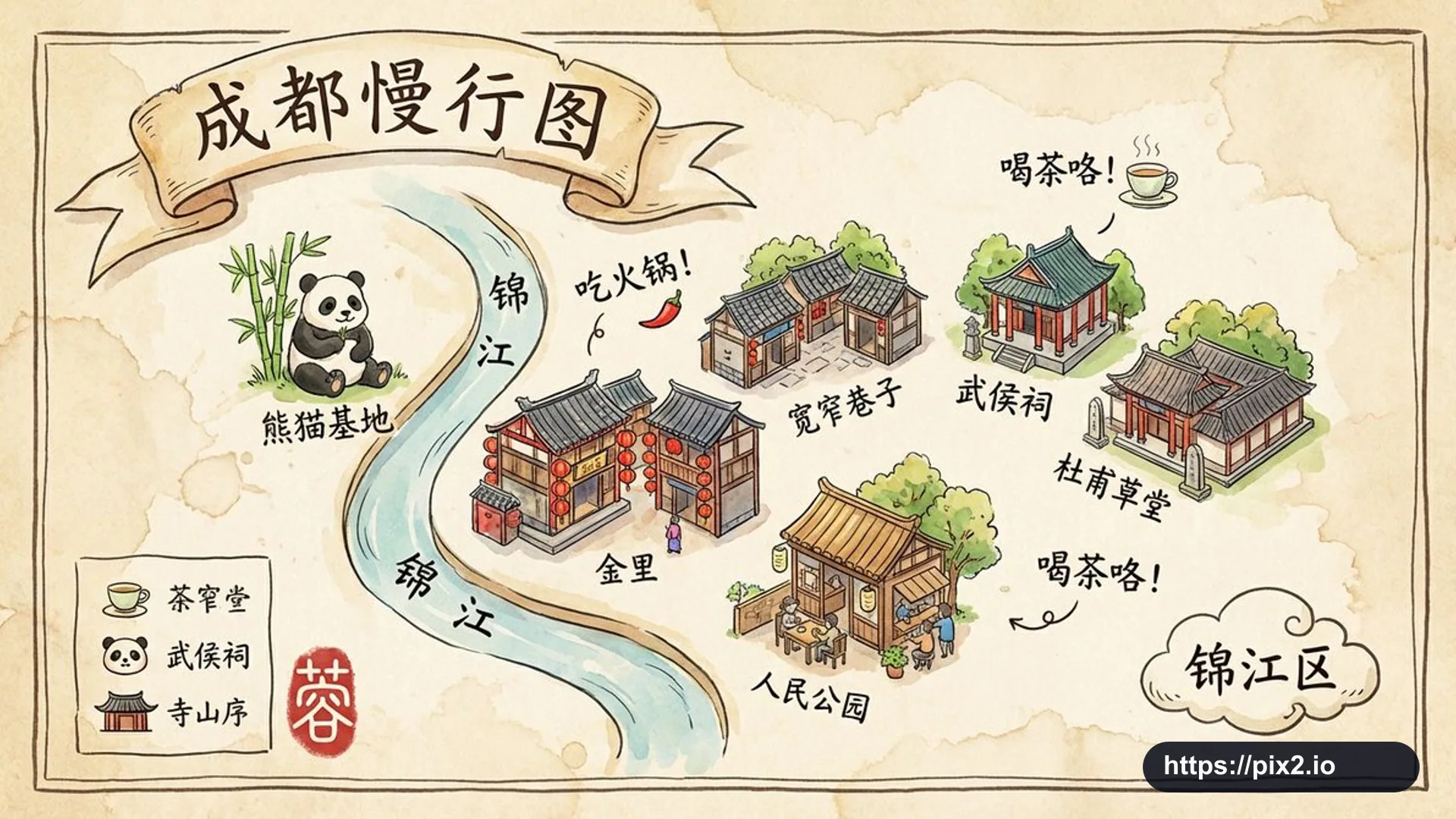
Create a charming and refined 16:9 hand-drawn tourist map of Chengdu in a warm hand-painted animation concept-art aesthetic. The whole image should look like watercolor and pen-wash illustration on textured aged parchment, whimsical, lively, and full of everyday life. Use a stylized isometric map layout that shows core Chengdu landmarks as cute, detailed miniature buildings and icons, such as pandas for the panda base, lanterns for Jinli, and a teahouse for People's Park. The layout should feel organic and free-flowing rather than a rigid grid. Typography is the key challenge: all text should look like graceful, slightly imperfect handwritten Chinese calligraphy in a xingkai style, written with the same pen as the illustration. Put the main title `成都慢行圖` artistically on a flowing ribbon at the top. Next to each landmark icon, write playful slightly angled labels such as `寬窄巷子`, `武侯祠`, and `杜甫草堂`; the labels should feel organically placed rather than flat horizontal overlays. Let a stylized Jinjiang River flow through the map, and write `錦江` elegantly along the river's curved path. Scatter small whimsical notes that combine text and icons, such as `吃火鍋!` beside a tiny red chili, `喝茶咯!` beside a steaming teacup, and `錦江區` inside a hand-drawn cloud shape. Add a hand-drawn legend box in one corner with small icons such as a teacup, panda face, and temple roof plus matching handwritten labels. Add a red hand-carved-seal style stamp with the character `蓉` in a corner, slightly overlapping the border. The result should feel like a masterpiece of illustrated cartography: text and illustration seamlessly integrated, soft watercolor stains and visible paper texture, confident lively pen lines, warm inviting personality. Avoid computer fonts, machine-generated text overlays, straight rigid grids, perfect alignment, only-horizontal labels, photo realism, 3D, generic icons, misspellings, garbled text, and watermarks.

 16:9 ・ 4K