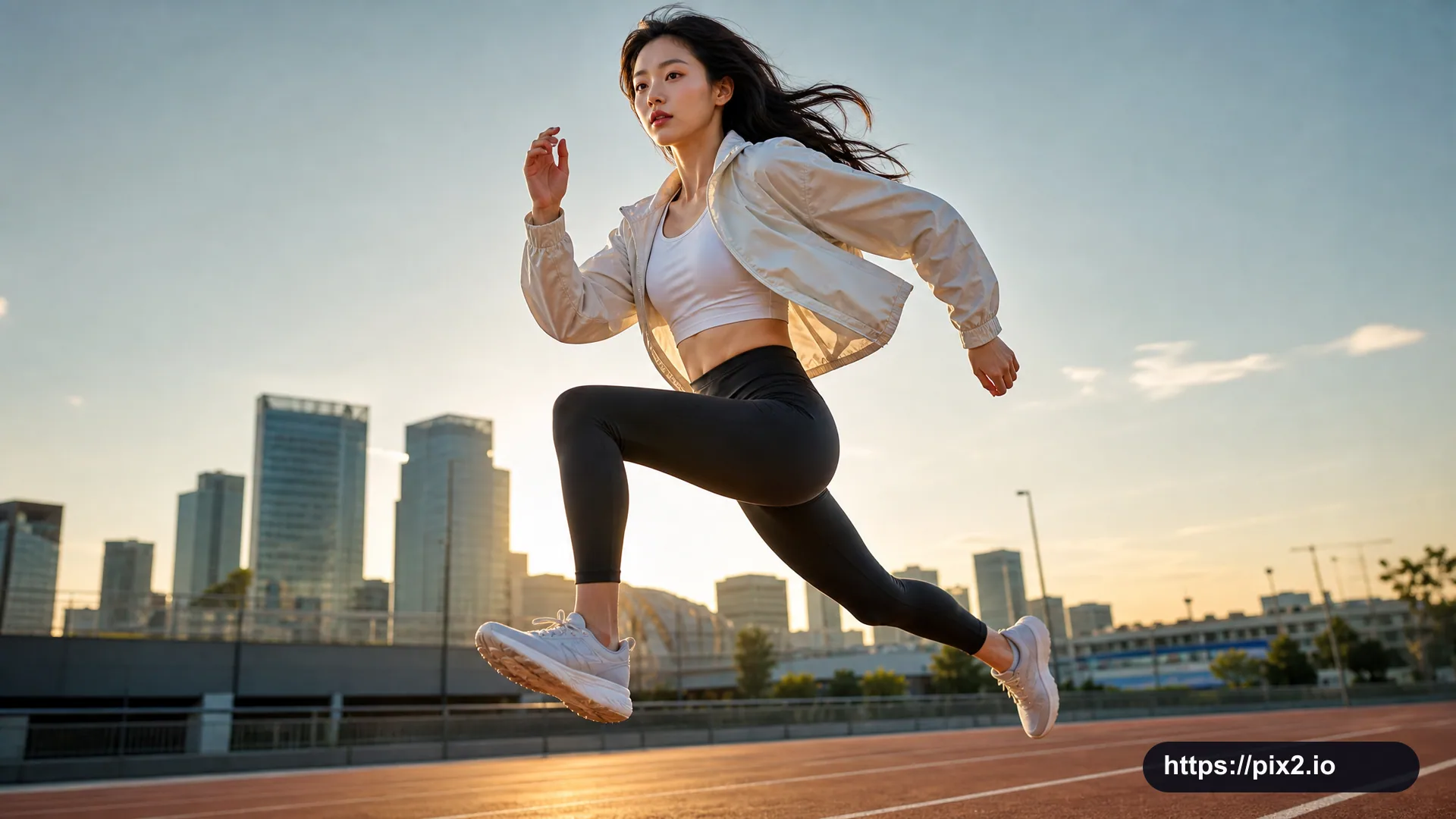
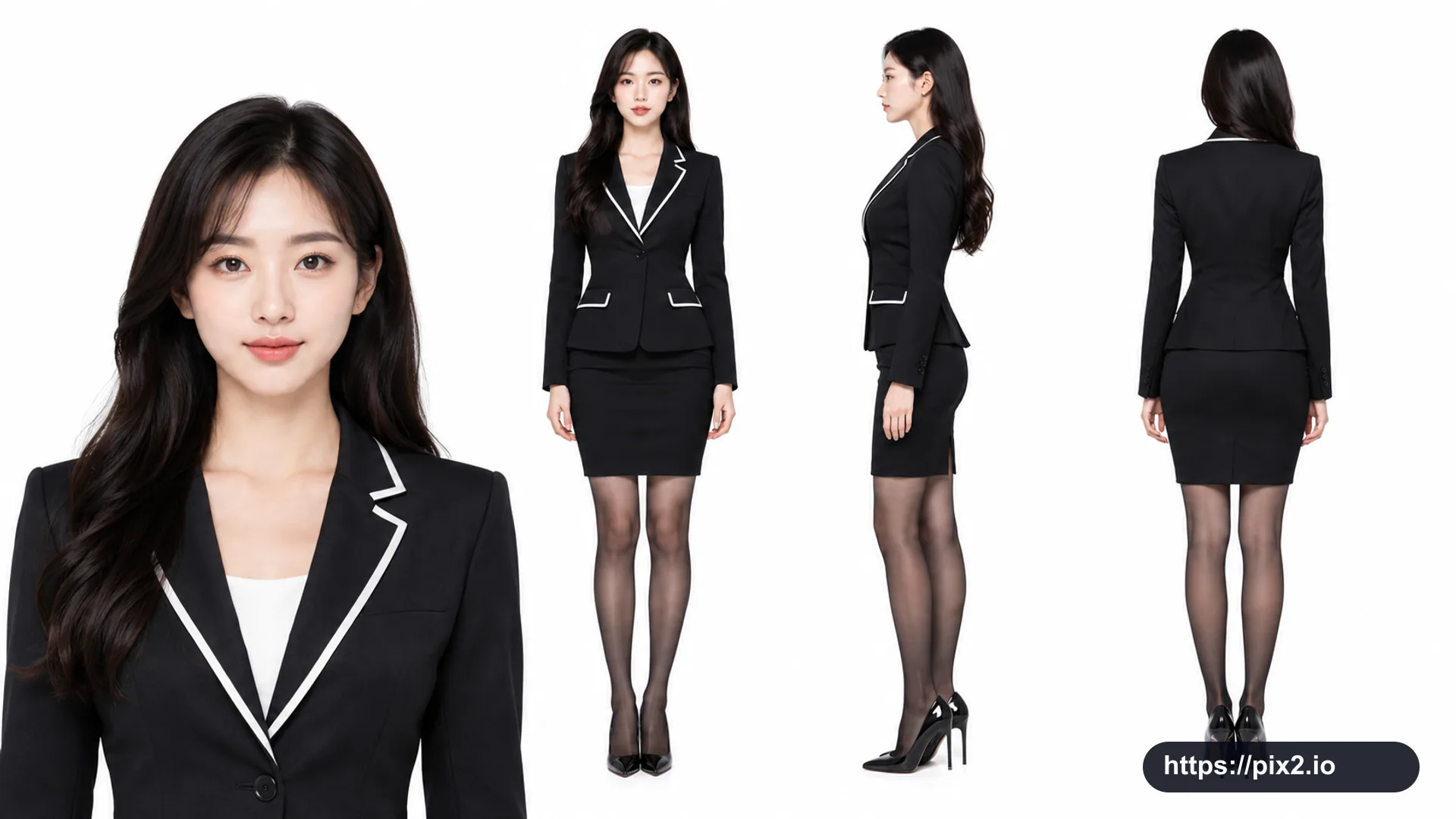
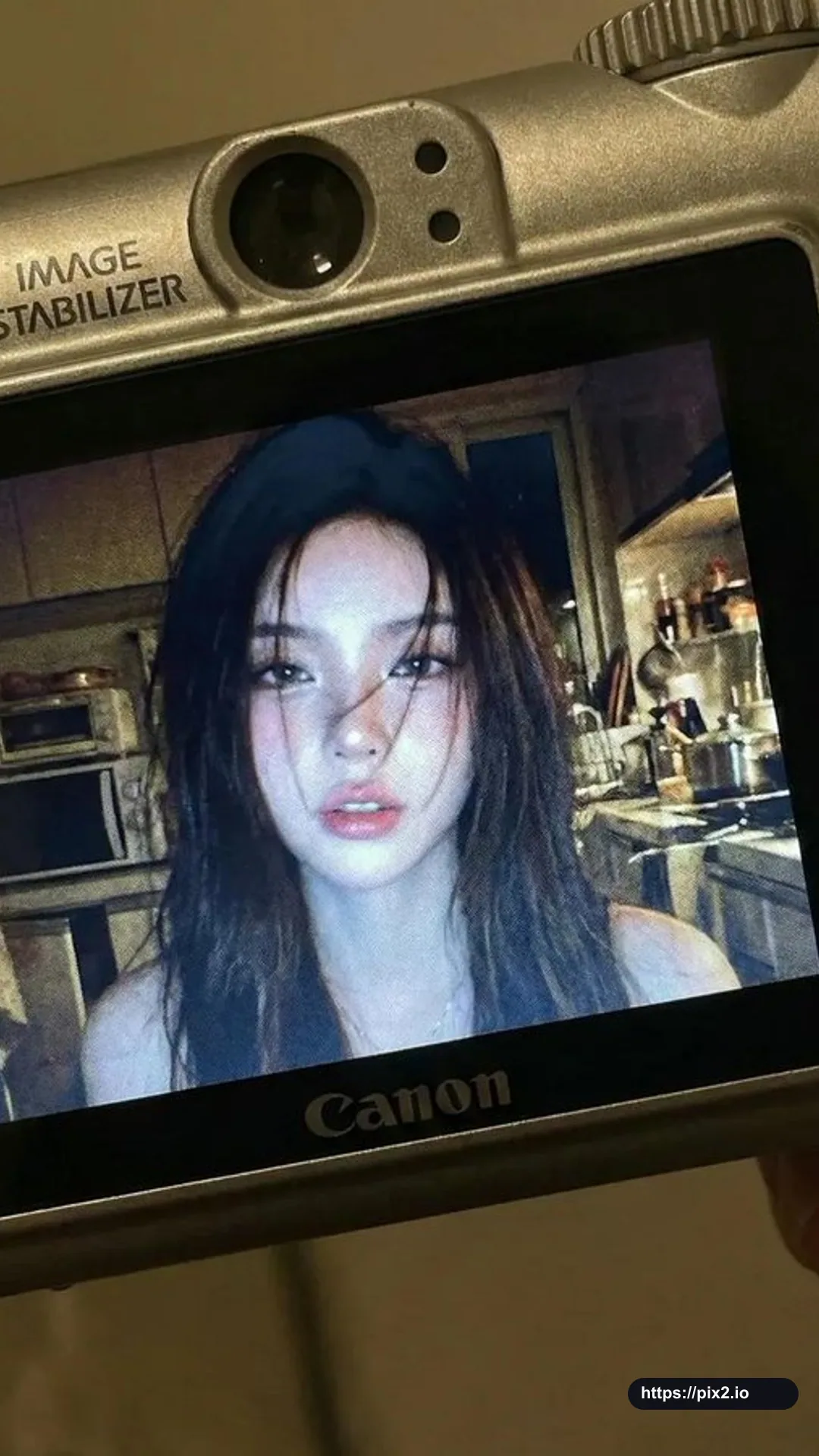
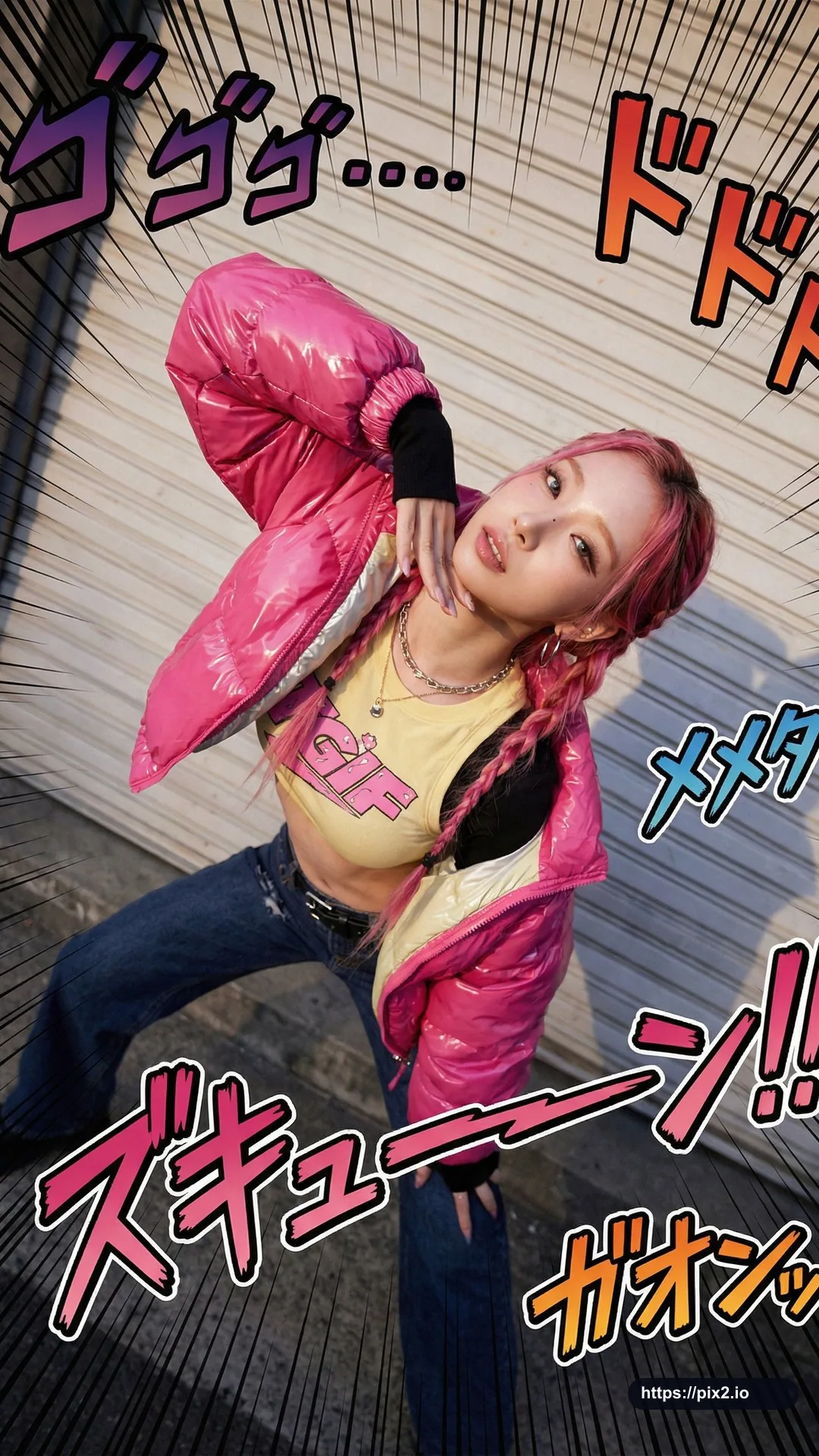
Use [Photo Reference] as the base image. Keep the person's face, eyes, hairstyle, makeup, outfit, overall identity, and original scene clearly recognizable and photorealistic. Do not turn the whole image into a drawing, and do not replace or redraw the background; only transform the perspective as needed. Repose the body into a randomized exaggerated flamboyant Japanese action-manga splash-page pose that pushes human flexibility while remaining anatomically plausible: extreme torso twist, strong contrapposto, confident head tilt, one hand framing the face, one arm extended or arched, and bold leg positions such as crossed legs, wide stance, or pointed toes. Maintain realistic lighting, natural cloth deformation, and photographic skin detail. Transform the camera viewpoint into one dramatic angle selected from ultra low-angle, ultra high-angle, dynamic 20-24mm wide angle, super-wide 14mm perspective, fisheye lens effect, Dutch-angle tilted horizon, close-up forced perspective with a large foreground hand reaching toward the camera, or long-lens compression that still feels theatrical. The face must remain recognizable in the new angle, and the background may warp only enough to match the perspective while staying the same scene. Add dramatic Japanese manga SFX in bold black-and-white ink lines, such as ゴゴゴゴゴ, ドドドドド, ズキューン, バァーン, or ガオン, floating behind the person and along the sides of the pose, integrated with the camera perspective but never covering the face. Add subtle speed lines, radiating impact lines, and perspective shock lines while keeping the original background visible. The final image should feel like a real photograph turned into a flamboyant action-manga splash page, with a 9:16 vertical composition.

 9:16 ・ 4K