Use GPT Image 2 to recreate [Emoji] as a 1:1 image with these JSON parameters:
{
"style": "plush emoji object",
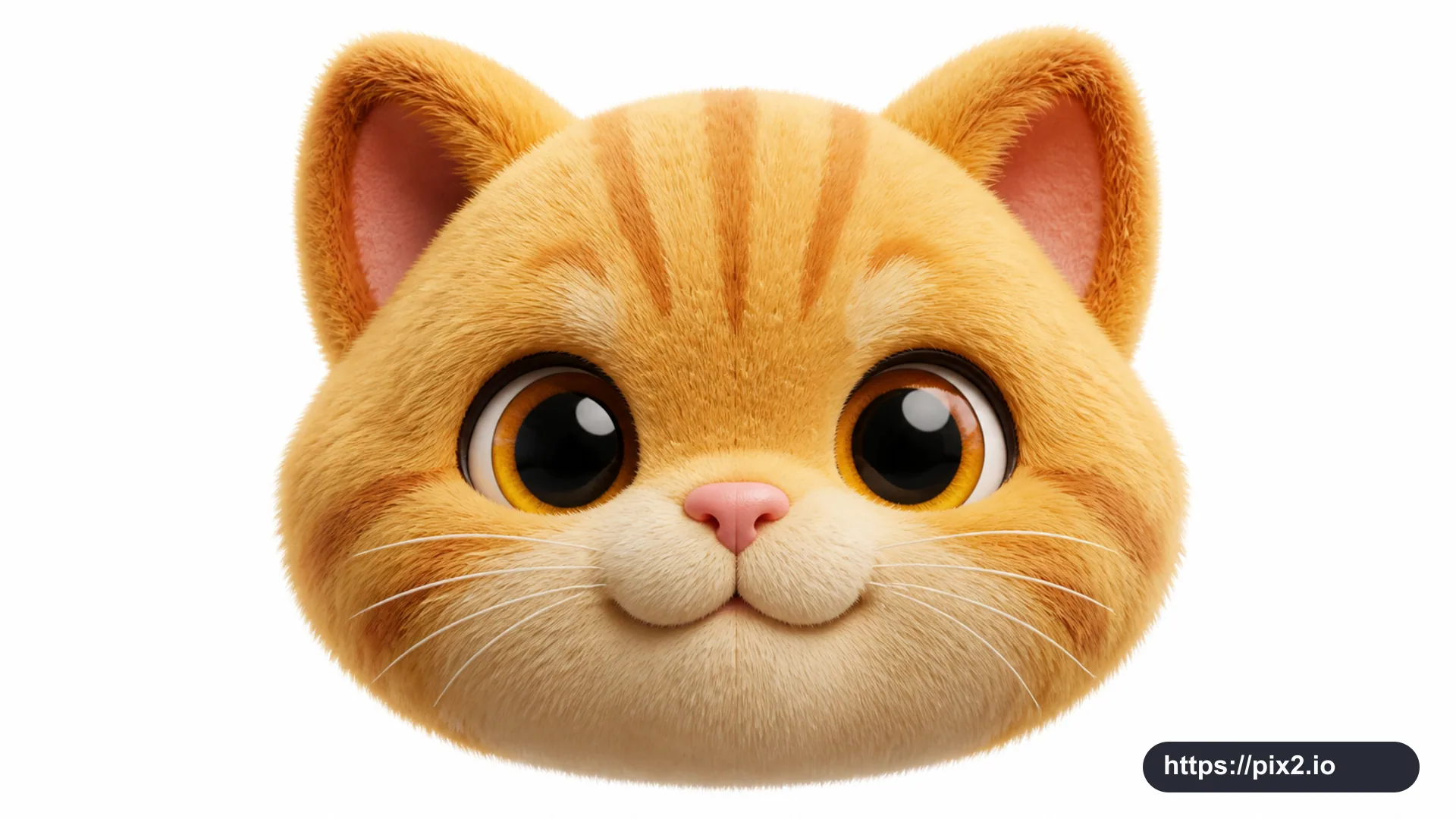
"description": "Transform the emoji into a soft, realistic plush object with high-quality fabric and refined structure. Do not anthropomorphize the emoji; avoid adding extra faces or cartoon features beyond the original emoji design. Focus on accurate texture, natural form, and subtle construction details that give the plush object character.",
"features": {
"shape": "Match the original emoji silhouette, softened into a slightly rounded plush form.",
"texture": "Realistic woolly plush fabric with visible fiber detail and natural fabric folds.",
"color": "Stay faithful to the emoji color palette, using slightly softened tactile tones.",
"material": "Stuffed-toy fabric with visible stitching, seams, and high-quality finishing.",
"background": "Neutral or softly textured background that highlights the plush object form.",
"lighting": "Soft professional studio lighting with subtle shadow and depth."
},
"examples": [
"👌 becomes a plush hand making the OK gesture, with realistic fabric folds and seams.",
"🎯 becomes a soft plush target, with layered fuzzy rings and slight dimensional padding.",
"🎁 becomes a cube-shaped plush gift box, with fabric ribbon, visible stitches, and realistic textile texture.",
"🌊 becomes a wave-shaped plush object, with curled foam tips made from textured ocean-blue fabric."
]
}

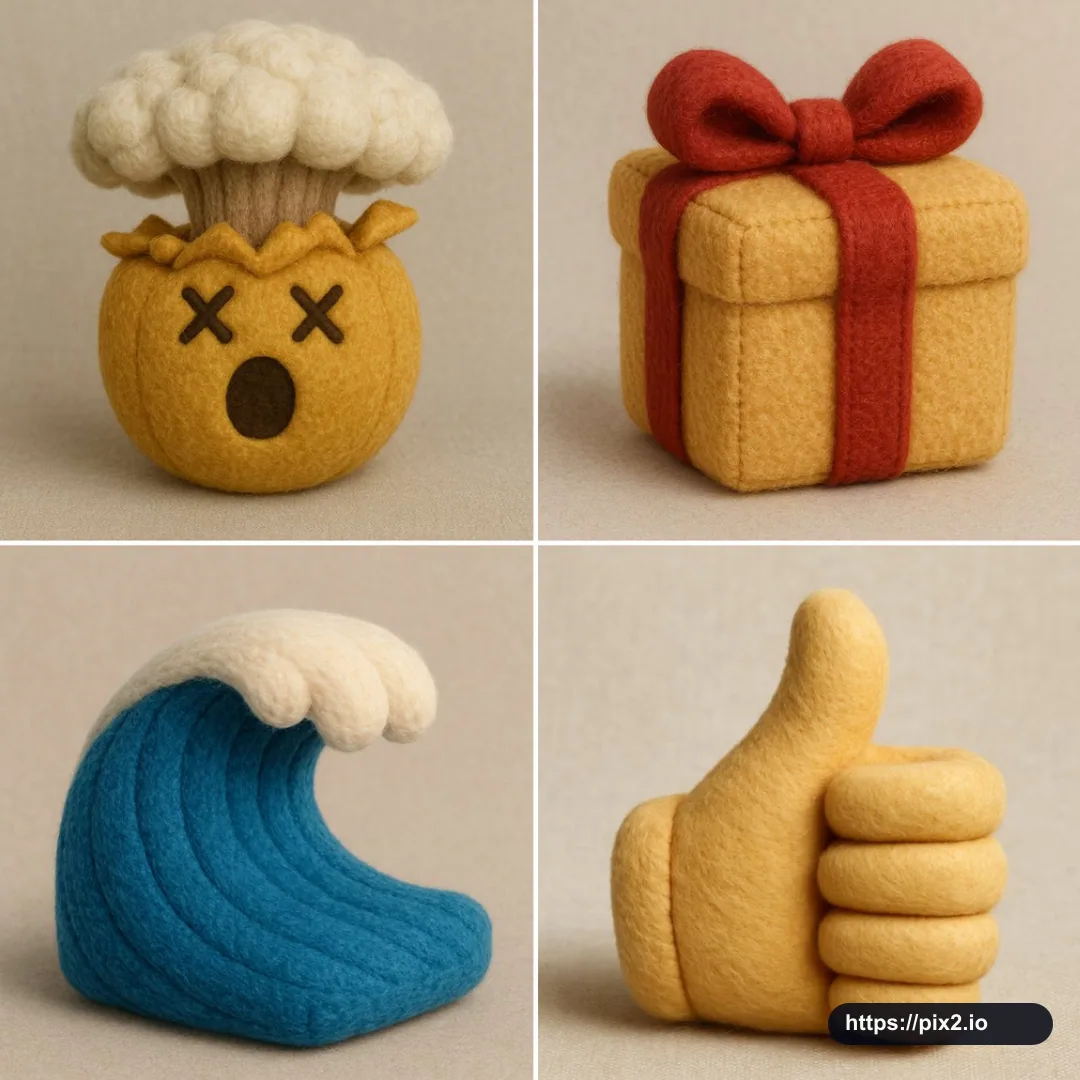 1:1 ・ 4K