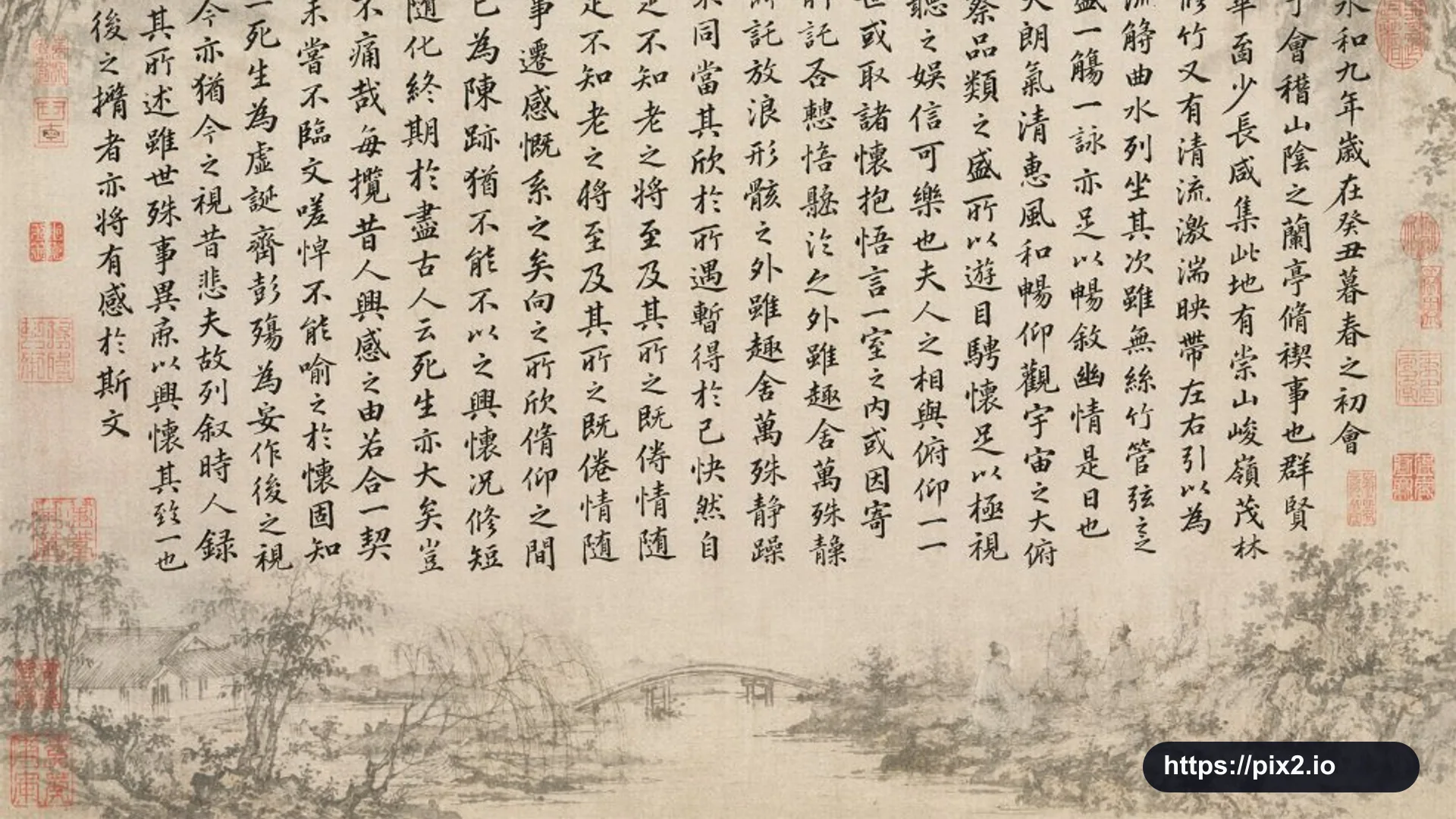
Create a 16:9 horizontal Chinese calligraphy copybook image inspired by Wang Xizhi and the artistic conception of the Lantingji Xu. Use an aged rice-paper background with soft beige fibers, subtle stains, and red seal impressions. The foreground should be dominated by elegant vertical Chinese calligraphy columns evoking the text and rhythm of the Lantingji Xu, with graceful running-script brushwork, natural ink density changes, varied stroke pressure, dry-brush texture, and a refined scholarly atmosphere. Behind the calligraphy, use a faint masked ink-wash landscape that matches the Lanting Gathering mood: winding water, bamboo, gentle hills, riverside pavilions, small bridge, spring scenery, mist, and scholars gathered in a quiet garden. Keep the background low-contrast and partially faded so it supports the foreground text without overpowering it. Add subtle archival edges and antique printed-seal details to make the image feel like a collectible calligraphy manuscript sheet. The composition should balance readable calligraphy, poetic scenery, and historical elegance. Avoid extra watermarks, modern logos, typed font appearance, random gibberish, overly dense unreadable text, harsh digital effects, incorrect seal clutter, cropped key calligraphy, and low-resolution artifacts.

 16:9 ・ 4K