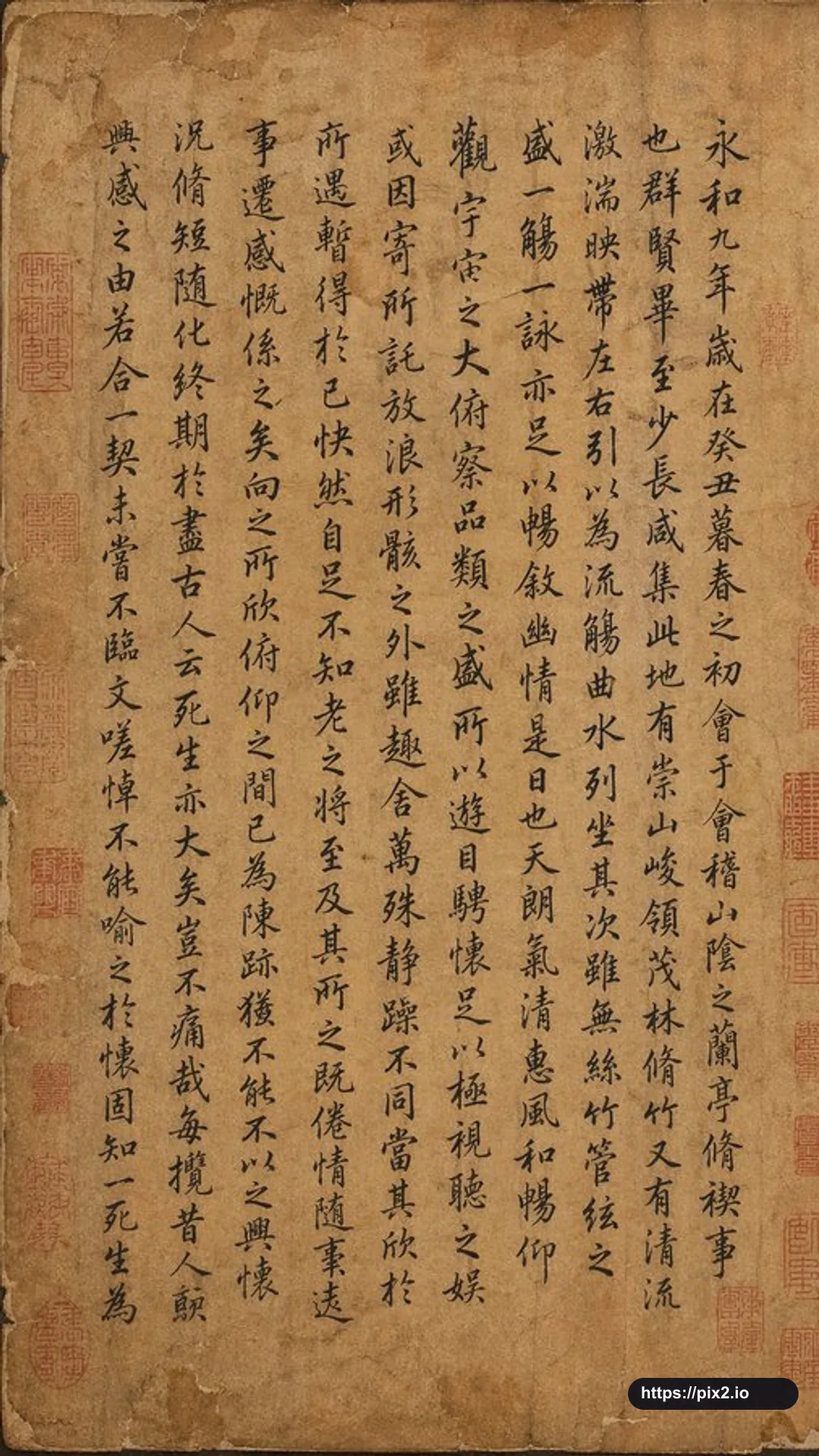
Create a vertical 9:16 fictional antique Chinese calligraphy manuscript image, presented as a museum-style visual study rather than a claimed authentic artifact. Use aged tan rice paper or silk paper with worn fibers, stains, creases, frayed edges, and subtle uneven discoloration. Fill the page with multiple vertical columns of black ink Chinese brush calligraphy, using a hand-written scholarly script with natural ink density variation, dry-brush texture, slight stroke bleeding, and imperfect rhythm. Add several muted red collector seal stamps along the margins and between columns, integrated into the paper as aged ink impressions. Keep the composition flat and document-like, as if the manuscript is photographed or scanned from above, with no modern frame, no glossy surface, and no visible hands or tools. The writing may be fictional or pseudo-historical and does not need to be perfectly readable, but it should feel culturally respectful, elegant, and plausible as an antique-style study sheet. Avoid claiming the image is a real original, avoid forging a known artist's work, avoid copying an existing museum artifact, avoid modern printed fonts, avoid crisp vector lettering, avoid watermarks other than the Pix2 preview watermark, avoid logos, and avoid any certificate or appraisal language. Output aspect ratio: 9:16.

 9:16 ・ 4K